Author Archives: Eric Piza

NBC News I-TEAM Exclusive: Tricked Out & Dangerous

The Criminogenic Effect of Marijuana Dispensaries in Denver, Colorado: A Microsynthetic Control Quasi-Experiment and Cost-Benefit Analysis

Connealy, N., Piza, E. and Hatten, D. (2020) Justice Evaluation Journal, 3(1): 69-93 Published Article (Open Access) Study Abstract The study analyzed the criminogenic effect of legalizing recreational marijuana dispensaries in Denver. Street segments with recreational dispensaries experienced no changes in violent, disorder and drug crime but did experience an 18% increase in property crime,Continue reading “The Criminogenic Effect of Marijuana Dispensaries in Denver, Colorado: A Microsynthetic Control Quasi-Experiment and Cost-Benefit Analysis”
The Sensitivity of Repeat and Near Repeat Analysis to Geocoding Algorithms

Haberman, C., Hatten, D., Carter, J. and Piza, E. (2021) Journal of Criminal Justice, 73: 1-12 Open Access Post PrintPublished Article Study Abstract Purpose: To determine if repeat and near repeat analysis is sensitive to the geocoding algorithm used for the underlying crime incident data. Methods: The Indianapolis Metropolitan Police Department provided 2016 crime incidentContinue reading “The Sensitivity of Repeat and Near Repeat Analysis to Geocoding Algorithms”
Private Security and CCTV Surveillance: A Systematic Review of Function and Performance

Welsh, B., Piza, E., Thomas, A. and Farrington, D. (2020) Journal of Contemporary Criminal Justice, 36(1): 56-69 Research BriefOpen Access Post PrintPublished Article PAGE UNDER CONSTRUCTION: Article description to be added soon.
Modern Policing using ArcGIS Pro
by Piza, E. and Baughman, J. Redlands, CA: Esri Press. (In Progress, Under Contract) PAGE UNDER CONSTRUCTION: Book description to be added soon.
Environmental Factors Influencing Urban Homicide Clearance Rates: A Spatial Analysis of New York City
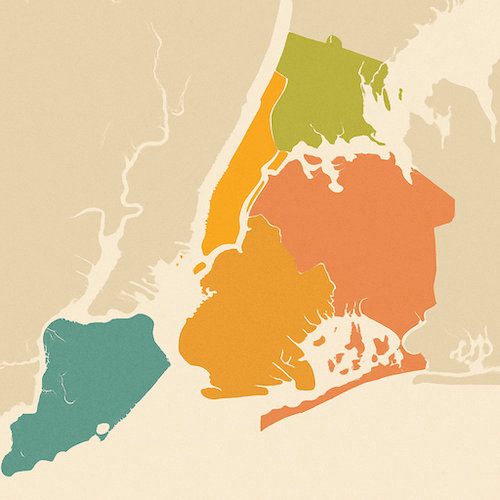
Kennedy, L., Caplan, J., Piza, E. and Thomas, A. (2020) Homicide Studies, DOI: 10.1177/1088767920976183 Published ArticleOpen Access Post Print Abstract: In this paper, we explore the conditions under which clearance rates improve bylooking at the experience across New York City. Using one agency provides a controlon the administrative differences that appear across other jurisdictions thatContinue reading “Environmental Factors Influencing Urban Homicide Clearance Rates: A Spatial Analysis of New York City”
John Jay Research: Eric Piza is Bringing the Data on Police Reform

Police reform is everywhere in the news, and everyone has a different perspective on the issue, from activists to police practitioners to politicians. John Jay Associate Professor of Criminal Justice Dr. Eric Piza is a former crime analyst who studies both police reforms — like the impact of body-worn cameras on police effectives — andContinue reading “John Jay Research: Eric Piza is Bringing the Data on Police Reform”
Pavementpieces.com: Criminologists question what it means to “defund the police”

Cutting the NYPD police budget by $1 billion is not enough for protesters and advocacy groups, but three criminologists from the city’s John Jay College of Criminal Justice said defunding the police is not going to be easy. “Defunding the police is kind of one of those generic terms that means different things for differentContinue reading “Pavementpieces.com: Criminologists question what it means to “defund the police””
Newsday: Village police department approves body cameras for officers

Village police department approves body cameras for officers…
 Eric L. Piza, Ph.D.