
Automatic license plate readers are now all over, capturing oceans of data. Across Massachusetts, small black cameras are photographing passing cars, capturing such details as the license plate, the color, and the roof rack. Police can search those records in seconds, sometimes from the other side of the country. These automatic license plate readers areContinue reading “How Flock cameras work”
Author Archives: Eric Piza
Gunshot Detection Systems: The Price of Policing?

Gunshot detections systems work. No, gunshot detection systems don’t work. Can we have it both ways? It’s kind of like the first line in A Tale of Two Cities: “It was the best of times, it was the worst of times.” Well? Which is it? This week we’ll be discussing Gunshot Detection Systems and theContinue reading “Gunshot Detection Systems: The Price of Policing?”
Exploring Officer Patrol Behaviors Using Automated Vehicle Locator and Body-Worn Camera Data
Funder: National Institute of Justice ($862,804) Principal Investigator: Eric L. Piza Co-Principal Investigators: Nathan T. Connealy & Victoria A. Sytsma Project Overview This project is a mixed-methods research project that leverages automated vehicle locator (AVL) data and body-worn camera (BWC) video to analyze police patrol activity and police-citizen interactions. We will first operationalize daily patrolContinue reading “Exploring Officer Patrol Behaviors Using Automated Vehicle Locator and Body-Worn Camera Data”
AI vs. Human Transcription: Evaluating Accuracy and Meaning in Police Body-Worn Camera Footage
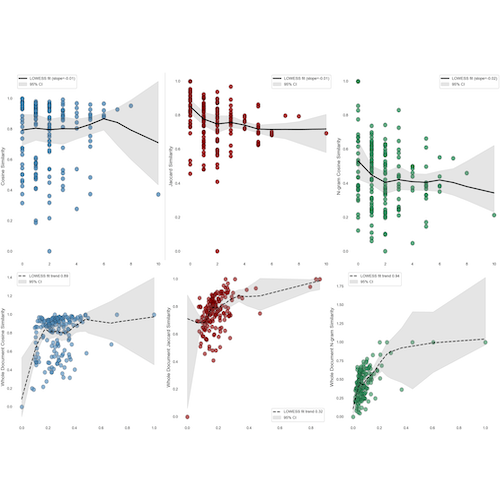
Savannah A. Reid, Stephen Abeyta, Eric L. Piza, Nathan T. Connealy, and Victoria A. Sytsma Journal of Experimental Criminology (2026) Research BriefVersion of Record (Open Access) Key Takeaways AI-generated transcripts of body-worn camera footage capture most of the same words as human-edited transcripts, but are much worse at identifying who is speaking AI transcripts identifyContinue reading “AI vs. Human Transcription: Evaluating Accuracy and Meaning in Police Body-Worn Camera Footage”
Computational Approaches and the Future of Urban Crime Research
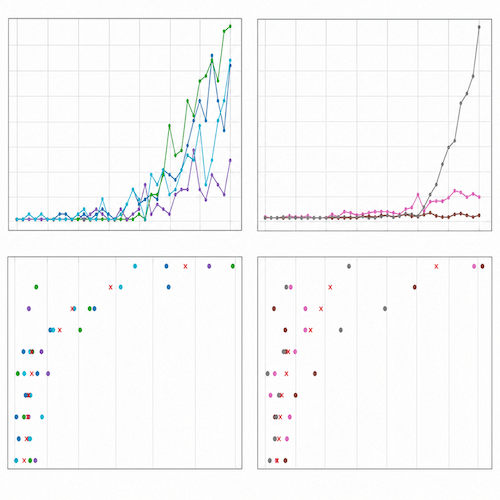
Gian Maria Campedelli, Zubin Jelveh, Aaron Chalfin, Daniel Semenza, Eric Piza, Ariadna Albors Zumel, Bruno Lepri, and Patrick Sharkey Nature (2026) Version of RecordOpen Access Post Print Abstract Urban environments have long been a central focus for crime researchers across diverse disciplines. Over the past few decades, this heterogeneous area of inquiry has experienced substantial methodologicalContinue reading “Computational Approaches and the Future of Urban Crime Research”
Geographic Networks of Gun Violence: Exploring Hot Spot Connectivity through Ballistic Evidence and Social Network Analysis
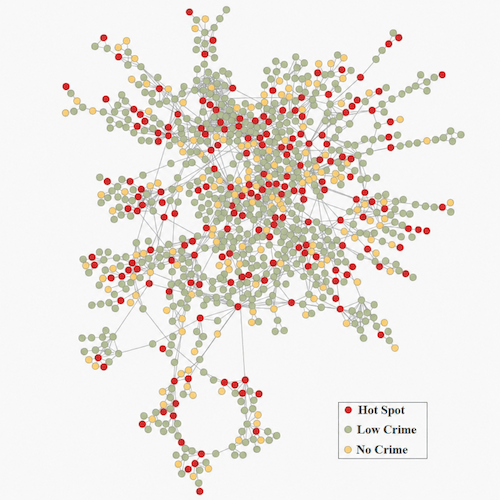
Eric L. Piza, Cassie McMillain, and Daniel Trovato Journal of Research in Crime & Delinquency (2026) Research BriefVersion of record (Open Access) Key Takeaways Ballistic evidence (NIBIN hits) reveals spatial links between gun violence hot spots A single large gun violence network spans much of the city, with 53% of street segments with NIBIN evidenceContinue reading “Geographic Networks of Gun Violence: Exploring Hot Spot Connectivity through Ballistic Evidence and Social Network Analysis”
Officers’ body cameras all fell off during violent arrest. Phoenix doesn’t know how much it happens

Despite tens of millions of dollars spent on the technology, the Phoenix Police Department does not track how often officers’ body cameras fall off during use-of-force incidents. ABC15 asked the city if it kept data on “body-worn camera dislodgements” while reporting on a violent and controversial arrest that appears to be set to end upContinue reading “Officers’ body cameras all fell off during violent arrest. Phoenix doesn’t know how much it happens”
Eric L. Piza Appointed Lipman Family Professor of Criminal Justice

On February 2nd, Northeastern University celebrated the installation of Eric L. Piza as the Lipman Family Professor of Criminal Justice. The endowed professorship recognizes Professor Piza’s leading scholarship in evidence-based policing, place-based crime prevention, and the use of technology and data in criminal justice—and strengthens the School of Criminology and Criminal Justice’s commitment to researchContinue reading “Eric L. Piza Appointed Lipman Family Professor of Criminal Justice”
KC wants to keep funding gunfire detection system. But has it reduced crime?

The Kansas City Police Department continues to request funding for a gunshot detection technology that research shows has not reduced shootings or improved case clearance rates. While the technology has not improved clearance rates or reduced shootings, research has shown that it has improved response times and evidence recovery.
Here Be Dragons: Burdens of Knowledge and Innovation in Evidence-Based Policing

Eric L. Piza Evidence Base: Criminal Justice Research, Policy and Action (2026) Research BriefVersion of Record (Open Access) Key Takeaways Evidence-based policing must evolve beyond “what works” to provide more value to police practitioners Innovation is constrained by the growing “burden of knowledge” that typifies developed sciences Further innovation requires deeper and more resource-intensive researchContinue reading “Here Be Dragons: Burdens of Knowledge and Innovation in Evidence-Based Policing”

