Pokémon cards bring business — and thieves

When Ron Zeida woke up in the middle of the night to a barrage of texts, he knew something was wrong.

On Dec. 1, a burglar broke into his Vanguard Comics store in Barnstable and swiped roughly $1,000 worth of merchandise from the shelves. In under a minute, the thief left the store’s glass door shattered and its tight-knit community shaken. Three weeks later, police are still combing for leads, Zeida said.

But given the range of merchandise that Vanguard carries, it could have been much worse.

Anxiety Over Pace of Brown University Shooting Investigation Mounts As Search For Killer Continues

In a city where police can tap live feeds of hundreds of surveillance cameras, the identity of the Brown University campus shooter remained unknown to the public Monday evening as the community mourned the two students who were killed and rallied around the nine others injured on Saturday.

But newly released images and the offer of a reward signaled authorities were intensifying a manhunt as much as they could without knowing which man they are hunting.

Research Mirrors Cleveland Reports that ShotSpotter Helps Police Respond To Gunshots But Doesn’t Reduce Crime

Growing national research shows that the gunshot detection system used in Cleveland helps police respond to shootings but does little to reduce crime or improve case outcomes.

A new report by Cleveland State University, released Friday, reviewed 87,000 ShotSpotter alerts, surveyed officers and residents and examined how the technology is used.

Is ShotSpotter Effective? Gunshot-detection technology can help police departments if they use it properly.

Facial recognition. Drones. Police have adopted a range of new technologies in recent years to help prevent and respond to crime.

Yet some of the most intense controversies still swirl around a product that’s been around for decades: gunshot-detection technology (GDT), most prominently ShotSpotter, which now operates in roughly 170 cities.

ShotSpotter uses an array of acoustic sensors to listen for loud noises, identify those likely to be gunfire, and alert law enforcement. Despite the system’s straightforward premise, several cities—most notably Chicago—have discontinued its use, citing concerns about effectiveness and racial disparities.

Judge orders agents in Chicago area to wear bodycams, adding she’s “startled” over violent clashes

A federal judge in Chicago has ordered immigration agents in Chicago to wear body cameras on duty, after raising concerns about agents’ use of tear gas against protesters.

U.S. District Judge Sara Ellis said her order would require any federal agents working under Operation Midway Blitz to wear body-worn cameras and keep them on during “law enforcement activities.” Details of the order were still being worked out ahead of another hearing in the case next week.

Using Automated Vehicle Locator Data to Classify Discretionary Police Patrol Across Space

Eric L. Piza, Nathan T. Connealy, Savannah A. Reid, and Christianna M. Palermo

Journal of Criminal Justice (2025)

Key Takeaways

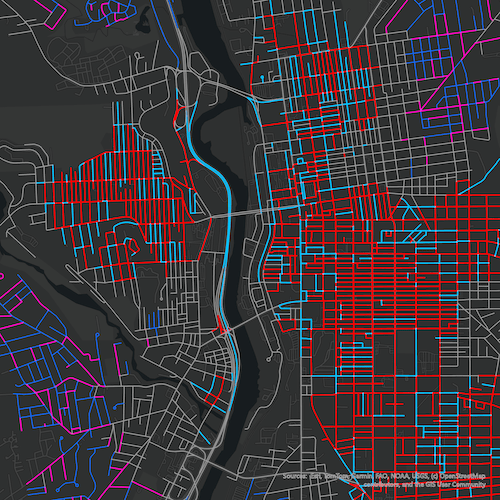
  • Automated vehicle locator data used to measure patterns of discretionary police patrol in Manchester, NH
  • Discretionary patrol is unevenly distributed throughout the city
  • Over 50% of street segments in the city had a high trajectory discretionary patrol level
  • Significant clusters of both discretionary patrol hot spots and cold spots observed throughout the city
  • Discretionary patrol hot spots were associated with heightened levels of traffic-related calls for service
  • Discretionary patrol hot spots were not associated with heightened crime levels
  • Better aligning discretionary patrol with crime hot spots may enhance crime prevention efforts

Research Summary

Place-based policing has been supported by decades of research demonstrating that crime is highly concentrated in small areas and that proactive policing can reduce crime when resources are strategically deployed. However, these strategies rely heavily on the assumption that officers have enough discretionary time available to act proactively. Prior research on police discretion has identified that a substantial portion of officer time is discretionary, but these estimates vary widely across studies and have seldom been mapped spatially.

The study uses Automated Vehicle Locator (AVL) data from the Manchester, NH Police Department. AVL technology uses GPS pings to record the exact time and location of police vehicles, typically every 10–30 seconds. The dataset covers January 2022 through December 2023 and includes more than 9.7 million AVL pings. Each ping records whether the vehicle was responding to an assigned call for service (committed time) or not (uncommitted or discretionary time). The researchers aggregated these data to the street segment level, resulting in 5,878 unique units of analysis across the city.

The analysis proceeded in three stages: 1) Group-Based Trajectory Modeling (GBTM) classified street segments into groups with similar monthly patterns of discretionary patrol time over the 24-month study period; 2) Anselin Local Moran’s I identified statistically significant spatial clusters (hot spots and cold spots) of discretionary patrol time, and; 3) Multinomial Logistic Regression: examined which crime, call-for-service, and neighborhood variables predict the likelihood of a street segment being part of a high-high (hot spot) or low-low (cold spot) discretionary patrol cluster.

The trajectory modeling identified three distinct groups of street segments: High discretionary time (55% of segments, averaging 50% of patrol time as discretionary), medium discretionary time: (26%, averaging 38%), and low discretionary time (19%, averaging 36%). This indicates that, on average, officers spend about half of their patrol time in uncommitted, discretionary activity. However, this availability is not uniform across space.

The spatial analysis found that high-discretionary street segments tended to cluster in Manchester’s downtown and along major thoroughfares. These areas exhibited high-high clusters of discretionary patrol time, while low-low clusters appeared around the periphery of the city. Interestingly, many low-discretionary segments were adjacent to high-discretionary segments, revealing fine-grained variation even within short distances.

None of the crime variables—including total crime, violent crime, or property crime—significantly predicted high-high discretionary patrol clusters. This suggests that areas where officers spend the most uncommitted time do not necessarily overlap with areas of highest crime. In other words, patrol availability and crime concentration appear misaligned. Only traffic-related calls for service were positively associated with high discretionary clusters. This may indicate that officers frequently engage in traffic enforcement during discretionary periods, which is consistent with previous research showing that vehicle stops are the most common proactive activity among patrol officers.

Areas with higher concentrated disadvantage and greater ambient population were more likely to be high discretionary hot spots, while areas with higher levels of theft were less likely to have high discretionary time. The findings suggest that police patrol availability correlates more with environmental features and mobility patterns than with direct crime measures.

The results carry important implications for both research and practice in policing. The study challenges the core assumption of place-based policing that officers naturally have the time and flexibility to engage in proactive crime prevention where it is most needed. From a policy perspective, AVL data could be a powerful tool for improving patrol allocation. With real-time tracking, supervisors and dispatchers could identify where officers have available discretionary time and redirect them toward high-crime areas or areas with heightened community demand.

When Police Stop Policing With Guests Dr. Eric Piza and Nathan T. Connealy

In 2020, there were protests in Seattle, Washington following the death of George Floyd.  For a period of 24 days, an area that became known as the Capitol Hill Occupation Protest (CHOP) was treated as an autonomous zone where the police did not respond to calls.  As a result, the CHOP zone became an example of what happens when police stop policing.  Dr. Eric Piza and Dr. Nathan T. Connealy largely used data from the City of Seattle Open Data portal, analyzing data from more than one year prior to CHOP with two microsynth models to understand average and seasonal crime trends. 

President Trump spotlights crime in US cities: Here’s what the data shows

President Donald Trump has cast a spotlight on crime in several cities across the United States.

Washington, D.C., was the first target when, in early August, Trump deployed National Guard troops to crack down on crime. Now, the president has said Baltimore and Chicago are next.

“(Washington, D.C.,) serves as a template, and we’re going to do it elsewhere,” Trump said in a Sept. 2  News Conference. As Trump centers crime in the national conversation, there are limits to what experts can and cannot say with crime statistics.

As Trump Deploys Troops To D.C., Research Shows Crime Is Already At Historic Lows

As National Guard troops from Ohio, Mississippi, Tennessee, and other states flood into Washington, D.C. under the Trump administration’s “crime crackdown,” one thing is missing: a crisis. In fact, crime in the nation’s capital is at a historic low.

Violent crime is down 26% year-over-year, according to the Metropolitan Police Department. Nationally, the FBI’s most recent Uniform Crime Report shows a nearly 6% drop in violent crime, an 11% decrease in property crime, a 15% reduction in murders, and a 25% drop in motor vehicle theft. The post-pandemic crime spike? All but gone.

And yet, instead of investing in the public health, education, and social programs that have helped cities like D.C. drive down crime, the federal government has chosen to deploy troops.

Will Sacramento keep controversial gunshot-detection tech? Budget may be an issue

As Sacramento grapples with its multimillion-dollar structural deficit, officials are considering whether to commit money to a controversial gunfire-detection technology. For more than a decade, Sacramento has contracted and spent millions on ShotSpotter — a system that detects and locates suspected shooting incidents. Roughly 180 cities across the U.S. use this technology, according to California-based SoundThinking, which sells the system.