
Eric L. Piza, E., Jason Szkola, & Kwan-Lamar Blount-Hill, K. (2021) Policing: A Journal of Policy and Practice, 15(2): 1217-1231. Research BriefOpen Access Post PrintPublished Article Key Takeaways Lack of support from leadership and mid-level managers identified as most damaging factors to police research Crime analysts identified as easiest to incorporate into program evaluation effortsContinue reading “How Can Embedded Criminologists, Police Pracademics, and Crime Analysts Help Increase Police-Led Program Evaluations? A Survey of Authors Cited in the Evidence-Based Policing Matrix”
Yearly Archives: 2020
Crime Control Effects of a Police Substation Within a Business-Improvement District: A Quasi-Experimental Synthetic Control Evaluation

Eric L. Piza, Andrew P. Wheeler, Nathan T. Connealy, & Shun Q. Feng (2020) Criminology & Public Policy, 19(2): 653-684. Research BriefVersion of Record (Open Access)Data *This study was funded by the Professional Staff Congress – The City University of New York. Key Takeaways The Newark Police Department opened a police substation in their downtownContinue reading “Crime Control Effects of a Police Substation Within a Business-Improvement District: A Quasi-Experimental Synthetic Control Evaluation”
CCTV Surveillance for Crime Prevention: A 40-Year Systematic Review with Meta-Analysis

Eric L. Piza, Brandon C. Welsh, David P. Farrington, & Amanda L. Thomas (2019) Criminology & Public Policy, 18(1): 135-159 Research BriefOpen Access Post PrintPublished Article *This study was funded by the Swedish National Council for Crime Prevention Key Takeaways CCTV was associated with a ~13% reduction of crime in target areas as compared toContinue reading “CCTV Surveillance for Crime Prevention: A 40-Year Systematic Review with Meta-Analysis”
Predicting Initiator and Near Repeat Events in Spatiotemporal Crime Patterns: An Analysis of Residential Burglary and Motor Vehicle Theft
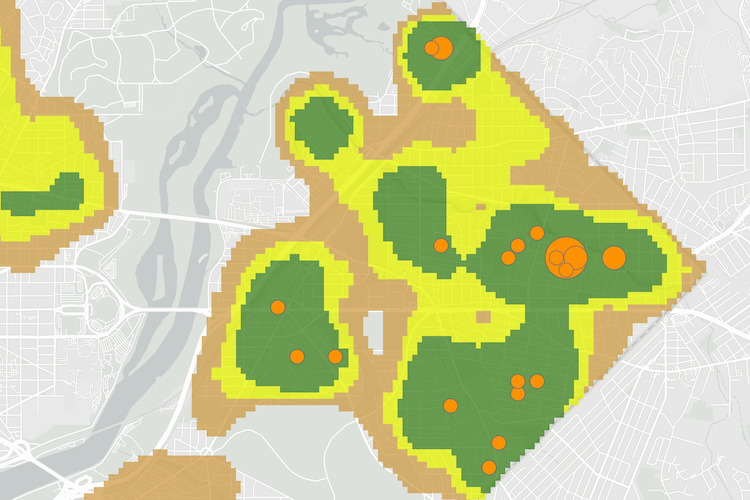
Eric L. Piza & Jeremy G. Carter, J. (2018) Justice Quarterly, 35(5): 842-870 Research BriefOpen Access Post PrintPublished Article *This study was supported by the Central Indiana Community Foundation, grant # 0000018207 Key Takeaways Near-repeat patterns were observed for both motor vehicle theft and residential burglary ~28% of motor vehicle thefts and ~37% of residentialContinue reading “Predicting Initiator and Near Repeat Events in Spatiotemporal Crime Patterns: An Analysis of Residential Burglary and Motor Vehicle Theft”
CBS News Chicago: Left in the dark: Tens of thousands of moments were never captured on Chicago Police body cameras. Lax oversight allows it to happen

Marcus Smith arrived at the Pulaski Orange Line Station on Chicago’s Southwest Side at about noon. It was Thanksgiving Day, 2017, and his mother was waiting for him in a parked car beneath the tracks.As the roar of the departing train echoed off the station’s worn concrete walls, he spotted his mom’s red Honda sedan.Continue reading “CBS News Chicago: Left in the dark: Tens of thousands of moments were never captured on Chicago Police body cameras. Lax oversight allows it to happen”
CBS News Chicago: Left in the dark. Tens of thousands of moments were never captured on Chicago Police body cameras. Lax oversight allows it to happen.
CBS News Chicago: What makes a good body camera policy?
Police Practice & Research Black Box Video Series: Advice for Peer Reviewers

Western Hemisphere Regional Transnational Crime Assessment and Analysis
2020-2021Co-Principal Investigator: U.S. Department of State($306,720) PAGE UNDER CONSTRUCTION: Project description to be added soon.
Measuring the Temporal Stability of Near-Repeat Crime Patterns: A Longitudinal Analysis
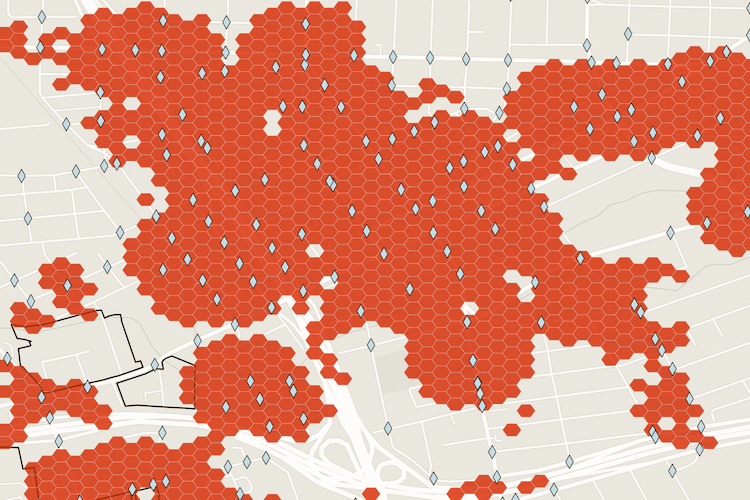
David N. Hatten & Eric L. Piza (2020) Crime & Delinquency Open Access Post PrintPublished Article Study Abstract This study investigates the temporal stability of identified near-repeat patterns using robbery crimes data in Newark, NJ. With the noteworthy exception of Hoppe & Gerell (2019) scholars have yet to explore the temporal stability of identified spatiotemporalContinue reading “Measuring the Temporal Stability of Near-Repeat Crime Patterns: A Longitudinal Analysis”

