
In 2020, there were protests in Seattle, Washington following the death of George Floyd. For a period of 24 days, an area that became known as the Capitol Hill Occupation Protest (CHOP) was treated as an autonomous zone where the police did not respond to calls. As a result, the CHOP zone became an example of what happens when police stop policing. Dr. Eric Piza and Dr. Nathan T. Connealy largely used data from the City of Seattle Open Data portal, analyzing data from more than one year prior to CHOP with two microsynth models to understand average and seasonal crime trends.
President Trump spotlights crime in US cities: Here’s what the data shows

President Donald Trump has cast a spotlight on crime in several cities across the United States.
Washington, D.C., was the first target when, in early August, Trump deployed National Guard troops to crack down on crime. Now, the president has said Baltimore and Chicago are next.
“(Washington, D.C.,) serves as a template, and we’re going to do it elsewhere,” Trump said in a Sept. 2 News Conference. As Trump centers crime in the national conversation, there are limits to what experts can and cannot say with crime statistics.
As Trump Deploys Troops To D.C., Research Shows Crime Is Already At Historic Lows

As National Guard troops from Ohio, Mississippi, Tennessee, and other states flood into Washington, D.C. under the Trump administration’s “crime crackdown,” one thing is missing: a crisis. In fact, crime in the nation’s capital is at a historic low.
Violent crime is down 26% year-over-year, according to the Metropolitan Police Department. Nationally, the FBI’s most recent Uniform Crime Report shows a nearly 6% drop in violent crime, an 11% decrease in property crime, a 15% reduction in murders, and a 25% drop in motor vehicle theft. The post-pandemic crime spike? All but gone.
And yet, instead of investing in the public health, education, and social programs that have helped cities like D.C. drive down crime, the federal government has chosen to deploy troops.
Will Sacramento keep controversial gunshot-detection tech? Budget may be an issue

As Sacramento grapples with its multimillion-dollar structural deficit, officials are considering whether to commit money to a controversial gunfire-detection technology. For more than a decade, Sacramento has contracted and spent millions on ShotSpotter — a system that detects and locates suspected shooting incidents. Roughly 180 cities across the U.S. use this technology, according to California-based SoundThinking, which sells the system.
Crime Prevention for Social Impact and Social Justice

Crime prevention should reduce harm and promote fairness. A new framework supports early action and community leadership. Real progress takes commitment and a focus on justice.
Can Nonexperimental Studies Improve the Policy Relevance of Crime Prevention Research? Insights from Public-Area Video Surveillance Interventions

Savannah A. Reid, Eric L. Piza, Brandon C. Welsh, and John P. Moylan
Annals of the American Academy of Political and Social Science (2024)

Key Takeaways
- This study analyzed the policy relevance of 151 video surveillance studies using the EMMIE framework
- The analysis measured whether relaxing methodological standards (i.e., not including a comparable control group) enhances the policy relevance of research
- Contrary to some critiques, including lower-rigor studies did not improve policy relevance
- Studies using experimental or high-quality quasi-experimental designs consistently provided more valuable policy insights—particularly on moderators, implementation, and economic costs—than weaker designs
- Both rigorous and less rigorous studies scored poorly on articulating or measuring causal mechanisms, highlighting a broader need to strengthen theory use in evaluation research
Research Summary
This article addresses a critical question in the field of evidence-based crime prevention: Can nonexperimental studies—those lacking experimental or quasi-experimental designs—enhance the policy relevance of crime prevention research? The article is motivated by recent criticisms of evidence-based crime prevention, specifically that prioritizing methodological rigor produces research that lacks insight into critical aspects of crime prevention that are critical to policymakers.
This study examines this issue using a large database of 151 evaluation studies focused on public-area video surveillance (commonly referred to as CCTV). The authors applied the EMMIE framework to both high-rigor (studies using a comparable control condition) and low-rigor (studies lacking a comparable control condition) CCTV evaluation studies. The EMMIE framework assesses five dimensions of evidence: Effects, Mechanisms, Moderators, Implementation, and Economics. The authors focused on the latter four dimensions, which are particularly relevant to policymaking. Each study received a “Q Score” from 0 to 2 on each dimension based on how thoroughly it addressed those aspects. For example, a score of 2 in economics indicates a full cost-benefit analysis, while a 0 indicates no mention of costs.
The analysis revealed a clear pattern: studies with stronger methodological designs consistently provided more policy-relevant information across three of the four dimensions. Specifically, these studies more frequently and more thoroughly reported on contextual moderators, implementation processes, and economic costs. There was no significant difference between high- and low-rigor studies in the “mechanisms” category, suggesting that causal theory and explanation are underdeveloped across the board.
Importantly, the results counter the idea that relaxing methodological rigor would yield a richer or more useful evidence base for practitioners. On the contrary, rigorous studies not only provide stronger causal claims but also better address the practical concerns of policymakers, such as how interventions function in context, what resources are required, and what the financial return on investment might be.
The results suggest that weakening methodological standards—such as by incorporating uncontrolled before-and-after studies—risks diminishing the reliability and utility of the evidence. While the authors acknowledge the limitations of a narrow focus on outcomes alone, they emphasize that expanding policy relevance should not come at the expense of internal validity. Instead, the research community should aim for a “second generation” of evidence-based studies that maintain rigor while also incorporating richer contextual and practical information.
Several important recommendations emerge from this study. First, systematic reviews should maintain strict methodological standards to ensure that only high-quality evidence informs crime policy. Second, researchers should improve how they report and analyze moderators, implementation details, and economic outcomes. Third, researchers should develop new platforms and tools—such as policy briefings or practitioner-focused publications—to make rigorous research more accessible and usable in practice.
Northeastern researchers call for greater attention to social impact and social justice in preventing crime

What do preschool and streetlights have in common?
According to Northeastern University researchers, both are effective ways to prevent crime, and they don’t require the involvement of the formal justice system.
These seemingly unrelated strategies—early childhood education and environmental design—share a crucial similarity, the researchers say. They focus on preventing crime before it occurs by addressing underlying conditions in communities.
Cleveland is spending millions on a controversial gunshot detection system. Is it making us safer?

Three years ago, the city of Cleveland agreed to quadruple the size of a controversial gunshot detection tool in the hopes of improving public safety.
But after spending $2.8 million on it, emerging evidence suggests the tool is not putting more criminals behind bars or reducing gun violence.
Cleveland.com and The Plain Dealer analyzed 129 homicides from 2024 and examined police reports of slayings that mentioned the use of ShotSpotter, a system that picks up the sound of gunshots and alerts authorities.
Those cases were less likely to be solved than fatal shootings overall. The findings, though limited to last year, build on a growing body of peer-reviewed studies that have come to a similar conclusion.
The Relative and Joint Effects of Gunshot Detection Technology and Video Surveillance Cameras on Case Clearance in Chicago
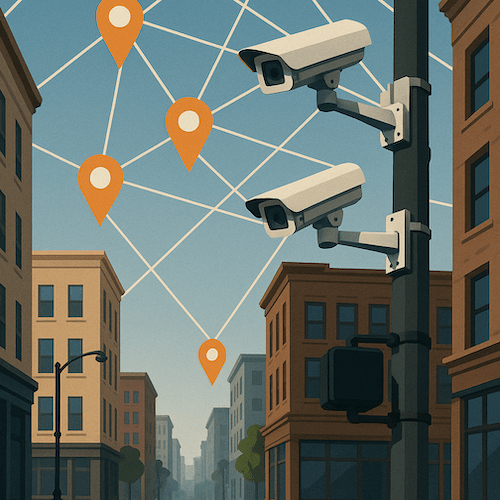
Eric L. Piza, Nathan T. Connealy, Rachael A. Arietti, George O. Mohler, and Jeremy G. Carter (2025)
Criminology & Public Policy
Key Takeaways
- A matched quasi-experimental examined how gunshot detection technology (GDT) and CCTV cameras affected case clearance rates for fatal shootings (6,068 cases) and non-fatal shootings (64,884 cases) between 2005-2019 in Chicago
- Neither GDT nor CCTV significantly improved case clearance rates for fatal or non-fatal shootings
- While the primary technologies showed little impact, Chicago’s Strategic Decision Support Centers (SDSCs) were associated with higher odds of clearing non-fatal shooting cases.
- While standalone technologies may not deliver investigative benefits, SDSCs that leverage multiple technologies together may be more effective for improving gun violence case clearance rates.
Research Summary
The current study is a comprehensive evaluation of how gunshot detection technology (GDT) and closed-circuit television (CCTV) surveillance systems affect police case clearance rates in Chicago.
Video surveillance cameras in the current study were deployed beginning in 2005 and included over 5900 unique camera deployments by 2019. The Chicago Police Department (CPD) first deployed GDT in a pilot phase in September 2012, covering an approximately 3-square mile area. In 2017, CPD began extending GDT coverage across the city through ten additional deployment phases (11 total), which brought the coverage area to over 136 square-miles. Mayor Brandon Johnson later terminated the City of Chicago’s contract with ShotSpotter, leading to the GDT system being decommissioned in September 2024.
A matched quasi-experimental design analyzed 6,068 fatal shootings and 64,884 non-fatal shootings occurring between 2005 and 2019 to determine whether these widely adopted technologies actually improve investigative outcomes.
The study employed entropy balancing, a sophisticated statistical matching technique, to create weighted control groups that closely resembled treatment groups across multiple variables. Three treatment conditions were examined: shootings exposed to GDT only, shootings within 500 feet of CCTV cameras, and shootings exposed to both technologies simultaneously. This approach allowed researchers to isolate the specific effects of each technology while controlling for numerous factors that could influence case outcomes.
The results revealed that neither GDT nor CCTV significantly improved case clearance rates for either fatal shootings or non-fatal shootings. While the primary technologies showed minimal impact, the study uncovered an important finding regarding Chicago’s Strategic Decision Support Centers (SDSCs). These integrated facilities, which combine multiple technologies, including GDT, CCTV, and various databases with dedicated personnel and crime analysts, were associated with 19-24% higher odds of clearing non-fatal shooting cases.
The findings align with existing literature showing that CCTV tends to be most effective for less serious crimes like theft and disorder, rather than serious gun violence. Furthermore, the lack of GDT effect on case closure aligns with recent research incorporating similar matched quasi-experimental designs.
The research suggests that standalone surveillance technologies may not deliver the investigative benefits policymakers anticipate from their substantial investments. Rather than deploying technologies in isolation, law enforcement agencies may achieve better outcomes through comprehensive integration platforms that combine technological capabilities with human expertise and strategic coordination. In this sense, increased investment in rigorous testing of Strategic Decision Support Centers, as they appear to offer a promising model for maximizing the utility of multiple technologies in gun violence investigations.
Video Surveillance and Security
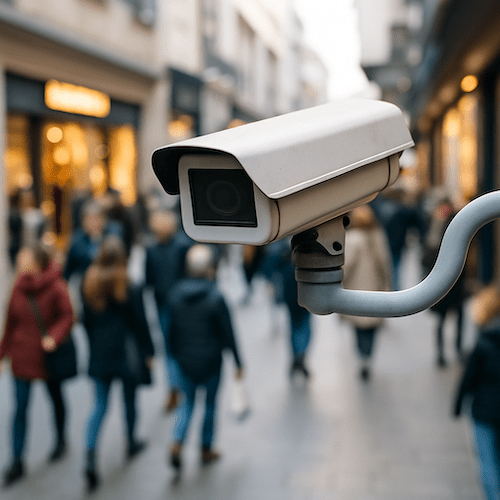
Eric L. Piza (2025)
International Association of Professional Security Consultants
Key Takeaways
- Both security professionals and members of the public tend to view CCTV favorably.
- Offenders typically do not consider the presence of CCTV as a serious threat and use simple techniques to evade detection.
- Experiments of CCTV in retail environments show positive effects on product shrinkage, but the effects can diminish over time.
- The overall research shows CCTV has a modest, but significant, impact on crime.
- The largest effects are on drug crime followed by vehicle crime and property crime. Overall, CCTV does not significantly impact violent crime.
The effect of CCTV on offender apprehension is mixed, with video surveillance systems on private railway networks generally having more success than systems in public places. - Research on CCTV’s effect on fear of crime is not well developed and suffers from several conceptual and methodological shortcomings.
- Cost-benefit analyses have found that CCTV can be cost-effective, offsetting expenses when crime reductions are generated.
- Research has yet to measure how computer vision technology improves surveillance.
Research Summary
This report critically examines the effectiveness of video surveillance—particularly CCTV—in crime prevention, detection, and public safety, with a focus on implications for private sector security practices. Drawing on decades of research and empirical evaluation, the report evaluates CCTV’s impact across multiple domains, including public perception, crime control, cost-effectiveness, and emerging technologies like computer vision.
Research shows broad public support for CCTV, with surveys indicating that most individuals feel safer and more willing to attend venues equipped with surveillance systems. However, the deterrent effect on offenders is inconsistent. While some shoplifters acknowledge CCTV’s presence, many rely on their belief that cameras are not actively monitored or are dummies, and often use simple tactics to avoid detection, such as staying in blind spots.
Systematic reviews and meta-analyses of CCTV evaluations reveal that CCTV has a modest but statistically significant impact on crime reduction. Crime decreases by about 13% in areas with CCTV, with the most substantial reductions in drug offenses followed by vehicle crime, and property crime. No significant effect was found for violent crime. The greatest impacts were seen in car parks, followed by residential areas. Actively monitored systems and those integrated with complementary interventions—such as improved lighting or directed police patrols—performed better than passive or standalone camera systems.
Video surveillance can enhance offender apprehension, especially when integrated with proactive policing. CCTV can also support retroactive investigations, though effects are higher in transportation settings than other places.
One of the most underexamined areas is CCTV operator performance. Studies reveal that surveillance activity is relatively rare, often due to “surveillance barriers” such as long police response times or unclear protocols. Operators frequently refrain from reporting incidents they deem too minor or believe won’t prompt a timely response.
While CCTV may reduce fear and increase feelings of safety, the research is underdeveloped. A systematic review found only 15 studies directly assessing CCTV’s impact on fear of crime. Results were mixed, with about half showing fear reduction, but most lacked control groups or used inconsistent survey methods.
Cost-benefit evaluations show mixed results. CCTV can be cost-effective, but this depends on how CCTV systems are financed and how crime costs are calculated.
Modern CCTV systems increasingly incorporate computer vision technology (CVT), which uses AI to detect weapons or suspicious behavior. Studies show promising results in detecting guns with high precision, but challenges remain in poor lighting or detecting small weapons.
Overall, CCTV can be a valuable security tool, but its effectiveness depends on strategic deployment, active monitoring, integration with other interventions, and contextual factors such as location and crime type. For private sector entities, the report encourages a tailored approach that considers unique operational needs, cost structures, and business outcomes when investing in surveillance technology.
 Eric L. Piza, Ph.D.