by Caplan, J., Kennedy, L., Barnum, J.* and Piza, E. (2015)
Cityscape: A Journal of Policy Development and Research, 17(1): 7-16
PAGE UNDER CONSTRUCTION: Article description to be added soon.
Lipman Family Professor | School of Criminology & Criminal Justice | Northeastern University
by Caplan, J., Kennedy, L., Barnum, J.* and Piza, E. (2015)
Cityscape: A Journal of Policy Development and Research, 17(1): 7-16
PAGE UNDER CONSTRUCTION: Article description to be added soon.

BRICK– The truth behind what led to the fatal shooting of 21-year-old Julian Hoffman by police may hinge on video surveillance footage rather than an eyewitness account.
Derek Hoffman, Julian’s father, told the Asbury Park Press that he is trying to obtain the surveillance footage from the company that records it. There may be at least two videos — one from the home and another from a camera posted within the townhouse neighborhood. A third video could have been recorded by a dash…

NEWARK — Six killings in as many days last week left Newark city officials searching for a response. To help curb the rising death toll, Newark Police Department Director Eugene Venable emptied the cupboard, reassigning over 100 administrative department officers from desk to street duty.
Despite the killings, Venable and other city officials vouch for Newark as a safe city. With the exception of shootings and rape, overall crime is down, Venable said in a Aug. 21 interview with NJ Advance Media. And the decision to temporarily reassign administrative officers was less about fighting crime than combating the perception that violent crime is on the rise in the state’s largest city, he said…
NEWARK – Last week, Mayor Ras Baraka and city police officials took aim at a Wall Street Journal article documenting a sharp rise in shootings this year, calling it an incomplete picture of the city’s struggles with violence.
The nature of the dispute, however, was not whether shootings had gone up. Rather, much of the criticism was focused on the paper’s use of state police intelligence data, instead of internal statistics compiled by city police — highlighting a curious discrepancy in how law enforcement agencies account for shootings and other crimes…

Around St. Louis, bloodshed rises in year since Michael Brown was killed…
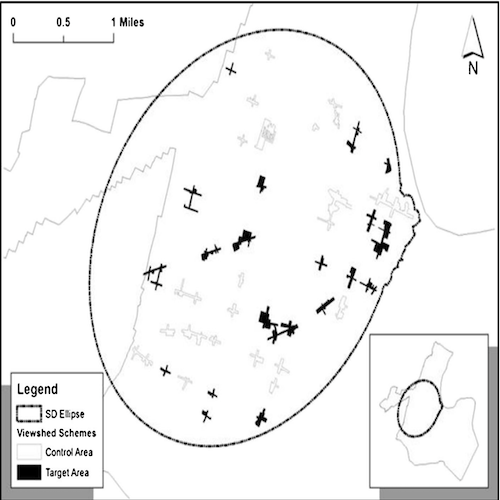
Piza, E., Caplan, J., Kennedy, L., and Gilchrist, A. (2015)
Journal of Experimental Criminology, 11(1): 43-69
*This study was funded by the National Institute of Justice, grant number 2010-IJ-CX-0026.
Abstract:
Objectives
This study was designed to test the effect of increased certainty of punishment on reported crime levels in CCTV target areas of Newark, NJ. The experimental strategy was designed for the purpose of overcoming specific surveillance barriers that minimize the effectiveness of CCTV, namely high camera-to-operator ratios and the differential response policy of police dispatch. An additional camera operator was deployed to monitor specific CCTV cameras, with two patrol cars dedicated to exclusively responding to incidents of concern detected on the experimental cameras.
Methods
A randomized controlled trial was implemented in the analysis. A randomized block design was used to assign each of the 38 CCTV schemes to either a treatment or control group. Schemes were grouped into pairs based upon their levels of three types of calls for service: violent crime, social disorder, and narcotics activity. Negative binomial regression models tested the effect that assignment to the treatment group had on levels of the aforementioned crime categories.
Results
The experimental strategy was associated with significant reductions of violent crime and social disorder in the treatment areas relative to the control areas. Incidence Rate Ratio (IRR) and Total Net Effect (TNE) values suggest that the number of crime incidents prevented was sizable in numerous instances. The experiment had much less of an effect on narcotics activity.
Conclusions
Overall, the findings support the hypothesis that the integration of CCTV with proactive police activity generates a crime control benefit greater than what research suggests is achievable via “stand-alone” camera deployment, particularly in the case of street-level crime.
by Papachristos, A., Braga, A., Piza, E., and Grossman, L.* (2015)
Criminology, 53(4): 624-649
PAGE UNDER CONSTRUCTION: Article description to be added soon.
by Salvemini, A., Piza, E., Carter, J., Grommon, E., and Merritt, N. (2015)
Evaluation Review, 39(3): 308-338
PAGE UNDER CONSTRUCTION: Article description to be added soon.
Caplan, J., Kennedy, L., Piza, E., Marotta, P.* (2014)
Crime Mapping & Analysis News: A Police Foundation Publication. Issue 1
PAGE UNDER CONSTRUCTION: Article description to be added soon.
by Caplan, J., Marotta, P.*, Piza, E., and Kennedy, L. (2014)
Policing: An International Journal of Police Strategies & Management, 37(4): 823-838.

Research Brief
Open Access Post Print
Published Article
PAGE UNDER CONSTRUCTION: Article description to be added soon.

 Eric L. Piza, Ph.D.