Commonwealth Beacon: ShotSpotter Honchos Fire Back

The company that sells ShotSpotter, the acoustic gunshot detection technology that has come under attack recently from everyone from Boston city councilors to the state’s two US senators and Congresswoman Ayanna Pressley, is firing back. And it brought in the big guns to do so.

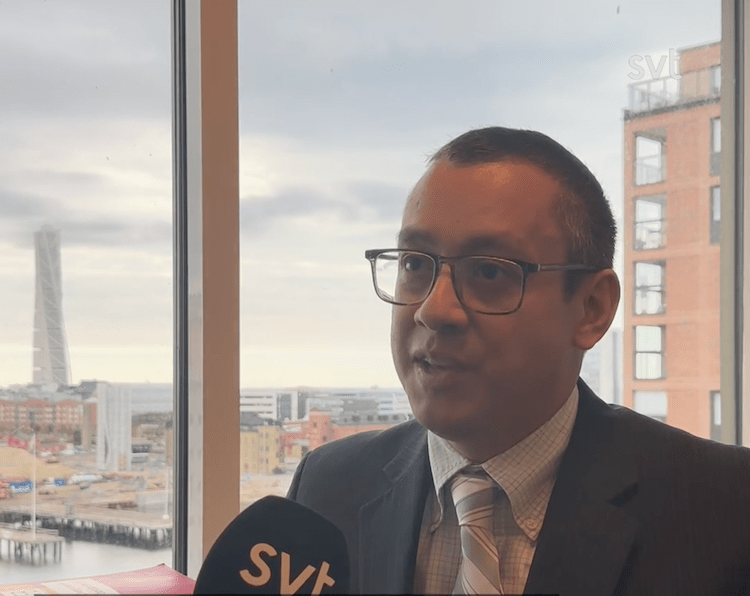
Holding forth in an interview last week at the Boston offices of Regan Communications, William Bratton, the celebrated former Boston police commissioner who went on to helm the police departments in New York City and Los Angeles, shot back at critics of the technology. Bratton, who sits on the board of SoundThinking, the California-based company that sells ShotSpotter services to police departments, accused elected officials who have questioned the technology of “political posturing” and said community residents, city leaders, and police officers who are closest to the problem strongly support the gunshot detection system. 

Undark: In Some Cities Second Thoughts About Gunshot Detection Sensors

Recent studies on technology that alerts police to gunfire have found it has little impact on shootings or prosecutions.


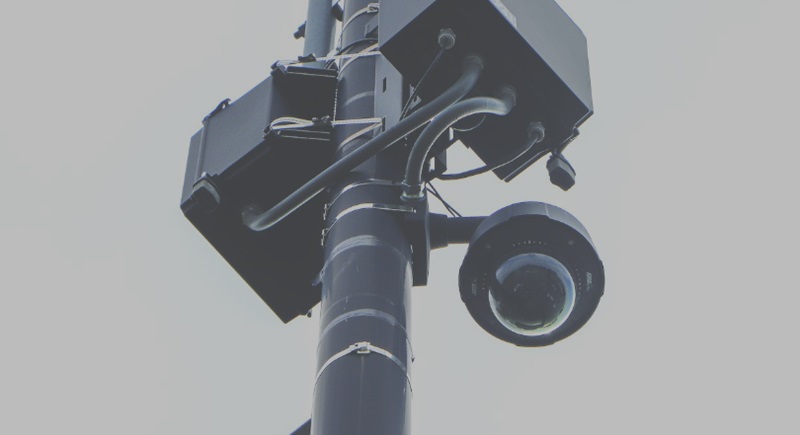
More than seven years ago, when the city of Chicago began its broad deployment of acoustic technology to identify and locate gunfire in high-crime neighborhoods, supporters promoted the system — which uses acoustic sensors, GPS software, and machine learning algorithms to alert the police in real-time — as an effective way to reduce handgun violence.

Chicago Justice Project: What does the science say about ShotSpotter?

In a first-of-its-kind independent analysis of the effectiveness of ShotSpotter, the science says the technology does not lead to more arrests and convictions for gun crimes and does not reduce these crimes in the areas where it is deployed. The study examined the impact of ShotSpotter in Chicago and Kansas City.

To understand the science more deeply, we sat down with the study’s first author, Dr. Eric Piza, who is a Professor of Criminology and Criminal Justice, Director of Crime Analysis Initiatives, and Co-Director of the Crime Prevention Lab at Northeastern University…

The Conversation: I studied ShotSpotter in Chicago and Kansas City – here’s what people in Detroit and the more than 167 other cities and towns using this technology should know

Like many large cities in the U.S., Detroit’s gun violence rate has fluctuated since the COVID-19 pandemic and the unrest after the murder of George Floyd in 2020. The city’s murder rate increased nearly 20% that year, meaning the city had the second-highest violent crime rate after Memphis, Tennessee, among cities with more than 100,000 residents…

Space-Time Association between Gunshot Detection Alerts, Calls for Service, and Police Enforcement in Chicago: Differences Across Citizen Race and Incident Type

Eric L. Piza, George O. Mohler, Nathan T. Connealy, Rachael A. Arietti, and, Jeremy G. Carter (2024)

Journal of Quantitative Criminology

Key Takeaways

  • The study investigates the association between Gunshot Detection Technology (GDT) alerts, calls for service (CFS), and police enforcement actions in Chicago
  • Results indicate significant spatial and temporal associations between both GDT alerts and CFS with subsequent arrests and stops
  • The effect of GDT and CFS was largely consistent across different racial groups, with no clear patterns of racial disparity emerging specifically due to GDT
  • The results suggest that any racial disparities in enforcement are more likely related to broader police response processes rather than the use of GDT itself

Research Summary

Chicago Mayor Brandon Johnson partially campaigned on a promise to terminate the City’s Gunshot Detection Technology (GDT) contract, arguing the system was unreliable, overly susceptible to human error, and played a pivotal role in the police killing of 13-year-old Adam Toledo. Johnson delivered on his promise on February 13, 2024 by announcing his decision to discontinue the use of GDT, with a phasing out of the technology set to begin during September 2024.

Recent research found that Chicago’s GDT system did not impact levels of gun violence or increase closure of shooting incidents in GDT-covered police districts. However, the level to which GDT contributed to the over-policing of people of color in Chicago remains an open empirical question.

Critics argue that GDT disproportionately targets disenfranchised communities, while supporters purport that GDT coverage areas reflect gun violence levels. Descriptive statistics in Chicago lend credence to both perspectives. Per capita gun crime levels were upwards of 1.5 times higher in the GDT target area than the remainder of the city, with the non-white population and poverty rate over twice as high and ~ 50% higher, respectively. An important question is whether the context of GDT deployment translates into enhanced enforcement, specifically against people of color.

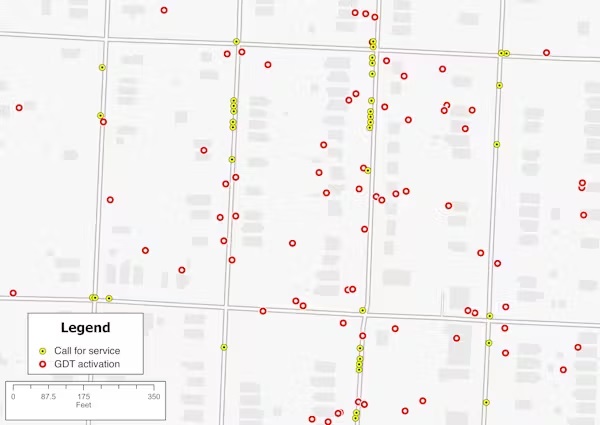
This study directly examines whether GDT leads to increased arrests and stops compared to traditional calls for service (CFS) and whether these enforcement actions exhibit racial disparities. The researchers employed the Knox test and point process test to analyze the spatial and temporal clustering of GDT alerts and CFS with subsequent arrests and stops. The analysis was conducted using data provided by the Chicago Police Department. The study disaggregates arrests and stops by type (gun, drug, traffic for arrests; suspect, traffic, investigative, gang, victim, or other for stops) and by race/ethnicity to identify any disproportionate effects across different racial groups.

The findings indicate a significant association between GDT alerts and increased arrests and stops in close spatial and temporal proximity. This association was also observed with traditional CFS, suggesting that GDT alerts are not uniquely driving police enforcement activities. The analysis revealed that the relative effect of GDT and CFS on enforcement actions was consistent across racial groups in most instances. However, there were a few instances of disparate effects. For some racial groups and specific types of arrests or stops, GDT was associated with heightened enforcement, while for others, CFS had a more pronounced effect. However, these effects did not consistently favor one racial group over another, suggesting that GDT itself does not exacerbate racial disparities beyond existing levels.

Overall, the study concludes that Chicago’s GDT system did not create additional racial disparities in arrests and stops beyond those already present in standard police responses to gunfire. The observed disparities in enforcement are more likely attributable to the general processes of reporting and dispatching incidents rather than the specific use of GDT. The authors suggest that the implementation of GDT should be considered in the context of its overall effectiveness and potential to improve police response times and spatial accuracy without disproportionately impacting any specific racial group.


Wired: The Mystery of AI Gunshot-Detection Accuracy Is Finally Unraveling

How accurate are gunshot detection systems, really? For years, it’s been a secret, but new reports from San Jose and NYC show these systems have operated well below their advertised accuracy rates.

Liz González’s neighborhood in East San Jose can be loud. Some of her neighbors apparently want the whole block to hear their cars, others like to light fireworks for every occasion, and occasionally there are gunshots…

Boston Globe: Calling 911 in Cambridge? Soon, the city may send social workers instead of police.

CAMBRIDGE — It took less than a minute for the crew of five social workers in matching mint-green T-shirts to find people who could use some help.

Right outside the door to their Central Square headquarters last month, they found a woman sitting on the ground with a few small bags, taking a rest in the 80-plus-degree heat, and gave her water and snacks. A few steps down Mass. Ave., they chatted with a homeless man who wanted assistance getting an ID.

Later, they consoled a woman who walked up to them in tears, asking if someone could pray with her. They obliged.

It was just another afternoon for Cambridge’s new five-member Community Assistance Response and Engagement, or CARE, team, which has for months been meeting with some of the city’s most vulnerable…

NGN: ShotSpotter improves detection and response to gunfire, but doesn’t reduce crime, Northeastern research finds

“Gun violence did not reduce in either (Kansas City or Chicago) following the introduction of ShotSpotter, and shootings were not anymore likely to be solved in either city,” Northeastern professor Eric Piza says.

ShotSpotter gunfire detection technology has delivered as promised in terms of enabling police to quickly detect and respond to gunshots in two American cities, research from Northeastern University finds… 

GBH 89.7 Boston Public Radio: 13 Mass. Municipalities and 1 University Use ShotSpotter. Critics wonder: Is It Worth It?

Boston police on patrol earlier this month say they heard “several loud bangs,” confirmed by a gunfire locator service called ShotSpotter, leading them to arrests of a Roxbury man on firearm charges.

In New Bedford, a local man was detained last year after the system alerted police to a shooting near a housing development.

And in Worcester, police say information from the technology led them to arrest a 26-year-old in December for a series of gun and drug charges.

Law enforcement tout the arrests as examples of the benefits of controversial technology that detects gunshots and alerts police about their location. Over a dozen communities in Massachusetts use the technology that many in law enforcement, and the company itself, insist saves lives.

The technology company said its customers in the state are Boston, Cambridge, Somerville, Chelsea, Everett, Revere, Pittsfield, Worcester, Lawrence, Brockton, New Bedford, Holyoke, Springfield and Northeastern University. GBH News reached out to all departments and the school for comment on their usage. Only Cambridge and Springfield replied…