The Effect of Gunshot Detection Technology on Evidence Collection and Case Clearance in Kansas City, Missouri

Eric L. Piza, Rachael A. Arietti, Jeremy G. Carter, and George O. Mohler (2023)

Journal of Experimental Criminology

*This study was funded by the National Institute of Justice (grant number 2019-R2-CX0004)

Key Takeaways

  • This study tests whether (1) shots fired calls for service in the gunshot detection technology (GDT) target area are more likely to be classified as unfounded; (2) police responses to shootings in the GDT target area are more likely to recover ballistic evidence or firearms; and (3) shootings in the GDT target area are more likely to be cleared
  • Shots fired calls for service in the GDT target area were 15% more likely to be unfounded
  • For fatal shootings, GDT treatment was not associated with increased likelihood of ballistic evidence collection or case clearance
  • For non-fatal shootings, GDT treatment was not associated with increased likelihood of ballistic evidence collection, gun recovery, or case clearance
  • GDT may not add value to investigations and may increase patrol workload

Research Summary

Clearance rates have long been used as a measure of police performance and effectiveness, reflecting the importance of incapacitation in disrupting patterns of violence and creating a general deterrence effect, and the public desire to deliver justice to crime victims and their families. Research relating to the level to which technology improves case clearance are highly mixed, with technology improving investigative function in certain cases but not others.

Gunshot detection technology (GDT) has become a central component of police efforts to respond to and investigate gun violence. Over 250 public safety agencies worldwide have adopted the ShotSpotter platform developed by SoundThinking, the global industry leader in GDT. The majority of evaluation studies have explored GDT’s crime prevention capacity, despite the technology arguably offering more potential for investigative police functions. The few studies that have focused on GDT’s impact on investigative outcomes, such as evidence collection and case clearance, have generated little consensus.

The current study evaluates GDT’s effect on evidence collection and case clearance in Kansas City, MO. The Kansas City Police Department (KCPD) installed SoundThinking’s ShotSpotter GDT system in September 2012, with the target area covering approximately 3.5 square miles of the city. Kansas City pays between $227,500 and $315,000 per year for their ShotSpotter system based on the advertised annual subscription cost of between $65K and $90K per square mile. The system detected 11,517 gunfire events through the end of 2019, the final year of our study period.

We used the entropy balancing method to conduct a matched case–control evaluation. Entropy balancing is a quasi-experimental design that matches treatment and control units by reweighting covariates based on propensity for treatment. The sum of the control unit weights equals the total number of cases in the treated group. Eighteen covariates were used in the entropy matching algorithm to create a weighted control group that mirrors the treatment group across relevant measures. The influence of GDT was tested through logistic regression models incorporating the weights from the entropy matching procedure. The entropy weights were incorporated as probability weights in the logistic regression models.

Results indicate that shots fired calls for service in the GDT target area have a 15% increased likelihood of being unfounded as compared to the control group. Fatal shooting incidents in the GDT target area were no more likely to result in collection of ballistic evidence for NIBIN analysis, or subsequent case clearance, as compared to incidents in the control area. Non-fatal shooting incidents in the GDT target area were no more likely to result in collection of ballistic evidence for NIBIN analysis, the recovery of firearms, or subsequent case clearance, as compared to incidents in the control area.

The current study did not find support for GDT as an investigatory tool for either fatal or non-fatal shooting incidents. The increased likelihood of unfounded shots fired cases has important implications for GDT use by police. This reflects increased workload of police responding to incidents where gunfire was not confirmed.


Gunshot Detection Technology Effect on Gun Violence in Kansas City, Missouri: A Microsynthetic Control Evaluation

Eric L. Piza, David N. Hatten, George O. Mohler, Jeremy G. Carter, and Jisoo Cho (2023)

Criminology & Public Policy

*This study was funded by the National Institute of Justice (grant number 2019-R2-CX0004)

Key Takeaways

  • Gunshot detection technology (GDT) was associated with ~30% higher levels of ballistic evidence collection in the GDT target area and surrounding catchment area
  • GDT was associated with ~30% higher levels of gun recoveries in the surrounding catchment area
  • GDT was associated with ~22% lower levels of shots fired calls for service in the GDT target area
  • GDT did not influence any of the gun violence categories involving confirmed victims (non-fatal shootings, fatal-shootings, and aggravated assaults/robberies committed with a firearm)
  • Agencies that prioritize gun violence reduction—rather than reducing calls for shots fired or increasing ballistic evidence collection—should consider if resources are better used for solutions other than GDT

Research Summary

Gunshot detection technology (GDT) has recently emerged as a core entry into the suite of technological gun violence prevention solutions incorporated by police. Despite increased popularity of the technology, the research evidence on GDT is underdeveloped, especially as compared to other police technologies. While certain GDT studies have taken efforts to select control areas with similar crime and sociodemographic conditions as the target areas, this is not commonplace in GDT research. Furthermore, such research has used a fuzzy matching approach where control areas are selected based on their general similarity with target areas rather than through quantitative matching techniques that ensure statistical equivalency between treatment and control areas.

The current study aims to contribute to the knowledge on GDT effect on crime occurrence through a rigorous evaluation of the technology in Kansas City, MO. The Kansas City Police Department installed SoundThinking’s ShotSpotter GDT system in September 2012, with the target area covering approximately 3.5 square miles of the city. Kansas City pays between $227,500 and $315,000 per year for their ShotSpotter system based on the advertised annual subscription cost of between $65K and $90K per square mile. The system detected 11,517 gunfire events through the end of 2019, the final year of our study period.

We apply the recently developed microsynthetic control method in the evaluation, incorporating over 13 years of data. The microsynthetic control method modifies the synthetic control method for application to micro-geographic units of analysis. The control group was specified to match the GDT target area across 18 covariates.

Both process and outcome measures were tested in the analysis. Process measures included gun recoveries and NIBIN ballistic evidence collection to reflect the enforcement-related causal mechanisms of GDT. Outcome measures included shots fired calls for service, non-fatal shootings, fatal shootings, and gun assaults and robberies. The statistical analysis was conducted for both the GDT target area to measure main effects and a surrounding catchment area to measure spatial displacement effects.

The collection of NIBIN ballistic evidence was significantly higher by approximately 30% compared to the weighted control area in both the GDT target area (476 vs. 365) and catchment area (351 vs. 271). Gun recoveries were nearly 13% higher in the catchment area than the weighted control area (1,668 vs. 1,477). Shots fired calls for service were approximately 22% lower in the GDT target area than the weighted control area (5,665 vs. 7,285). Importantly, none of the three crime types involving confirmed victims (fatal shootings, non-fatal shootings, gun assaults and robbery) exhibited any significant changes following the installation of GDT in either the target area or catchment area.

Overall, the study results do not offer much empirical support for GDT as a gun violence prevention tool in Kansas City. Agencies that highly prioritize increasing evidence collection and reducing unauthorized firearm discharges may consider dedicating necessary resources to acquire GDT. Agencies that prioritize the reduction of gun violence victimization, however, should consider whether resources are better used for solutions other than GDT.

The Impact of Gunshot Detection Technology on Gun Violence in Kansas City and Chicago: A Multi-Pronged Synthetic Control Evaluation

2020-2023

Funder: National Institute of Justice
($503,129)

Principal Investigator: Eric L. Piza

Co-Principal Investigators: Jeremy G. Carter & George O. Mohler

Project Overview

This quasi-experimental longitudinal interrupted time series project will evaluate the Gunshot Detection Technology (GDT) systems (ShotSpotter) in Kansas City, MO, and Chicago, IL using a synthetic control group approach to improve comparability. Both cities installed their GDT systems in 2012, which will allow for a comparison of relevant outcome measures in the 7-year post-GDT period (2012 – 2019) to the 7-year pre-GDT period (2005 – 2011). Because of differences in how GDT was deployed in Chicago and Kansas City, the project team will be able to determine the effect associated with the initial deployment of GDT in Kansas City and the continuous expansion of GDT coverage in Chicago.

Four distinct research questions will be explored for both KCPD and CPD: 1) What effect does GDT have on officer responses to and time spent on gunfire scenes? 2) What effect does GDT have on the collection of ballistic evidence? 3) What effect does GDT have on the occurrence of gun crimes? and 4. What effect does GDT have on criminal investigations (i.e., case closure) of gun crimes?

Project Publications

NGN: Stores are Locking Up Everyday Goods. Is Organized Retail Theft on the Rise?

Socks, cold medicine, even deodorant. Going to Target or CVS these days to grab essentials is a little more complicated as retailers lock up everyday goods in an effort to curb shoplifting. It’s enough to get shoppers frustrated and wondering “Is all this really necessary?”

Just how much shoplifting and organized retail crime is hurting stores is somewhat up for debate. Target announced last week that it is closing nine stores due to theft and organized retail crime. The corporation said Oct. 21 will mark the last day in business for some stores in Seattle; Portland Oregon; Oakland, California; San Francisco; and the Harlem neighborhood of New York City.

“We cannot continue operating these stores because theft and organized retail crime are threatening the safety of our team and guests, and contributing to unsustainable business performance,” Target said in a press release. “We know that our stores serve an important role in their communities, but we can only be successful if the working and shopping environment is safe for all.”

Wired: Predictive Policing Software Terrible at Predicting Crimes

Crime predictions generated for the police department in Plainfield, New Jersey, rarely lined up with reported crimes, an analysis by The Markup has found, adding new context to the debate over the efficacy of crime prediction software.

Geolitica, known as PredPol until a 2021 rebrand, produces software that ingests data from crime incident reports and produces daily predictions on where and when crimes are most likely to occur…

Cambridge Day: Cambridge Police Launch their Justice Dashboard, Exploring Unequal Treatment by Showing Trends

The long-awaited Procedural Justice Dashboard, a major Cambridge police department project since 2019, has arrived after repeated delays from staff shortages and technological barriers. Unveiled Aug. 15, the dashboard appears to have kept many – but not all – of its promises to shed light on police interactions with the public and examine them for racial bias. At first glance, the dashboard shows some racial disparities in arrests and traffic stops.

For example, dashboard data covering the period starting in 2010 show that arrests of black people far exceed their share of the Cambridge population, and the gap between arrests of black people and white people has increased in the past two years though overall arrest numbers dropped sharply. As for traffic stops, over the past five years, the percentages of black and Hispanic drivers who received a criminal citation was more than twice the percentage of white drivers who were criminally cited…

The Globalization of Evidence-Based Policing: Innovations in Bridging the Research-Practice Divide (2022)

(Purchase) | (Request Review Copy)

Introduction

1. Evidence-based policing: Research, practice, and bridging the great divide 

Eric L. Piza and Brandon C. Welsh

(Version of Record) | (Open Access Post Print)

Part I: Transferring scientific knowledge to the practice community 

2. Globalizing evidence-based policing: Case studies of community policing, reform, and diversion 

Peter Neyroud 

(Version of Record) | (Open Access Post Print)

3. Developing evidence-based crime reduction skills in mid-level command staff 

Jerry Ratcliffe 

(Version of Record) | (Open Access Post Print)

4. Fits and starts: Criminology’s influence on policing policy and practice 

Nancy G. La Vigne 

(Version of Record) | (Open Access Post Print)

5. EMMIE and the What Works Centre for Crime Reduction: Progress, challenges, and future directions for evidence-based policing and crime reduction in the United Kingdom 

Aiden Sidebottom and Nick Tilley

(Version of Record)

Part II: Empowering officers to conduct police-led science 

6. From practitioner to policymaker: Developing influence and expertise to deliver police reform 

Richard Smith 

(Version of Record)

7. Creating a social network of change agents: The American Society of Evidence-Based Policing 

Heather Prince, Jason Potts, and Renée J. Mitchell 

(Version of Record)

8. Building empowerment: The Canadian approach to evidence-based policing 

Laura Huey and Lorna Ferguson 

(Version of Record) | (Open Access Post Print)

9. Evidence-based policing in Australia and New Zealand: Empowering police to drive the reform agenda 

Lorraine Mazerolle, Sarah Bennett, Peter Martin, Michael Newman, David Cowan, and Simon Williams 

(Version of Record)

Part III: Aligning the work of researchers and practitioners 

10. The LEADS Academics Program: Building sustainable police–research partnerships in pursuit of evidence-based policing 

Natalie Todak, Kyle McLean, Justin Nix, and Cory P. Haberman 

(Version of Record) | (Open Access Post Print)

11. The benefits and challenges of embedding criminologists in crime analysis units: An example from Sweden 

Manne Gerell 

(Version of Record) | (Open Access Post Print)

12. Non-traditional research partnerships to aid the adoption of evidence-based policing 

Stephen Douglas and Anthony A. Braga 

(Version of Record)

13. Data-informed community engagement: The Newark Public Safety Collaborative 

Alejandro Gimenez-Santana, Joel M. Caplan, and Leslie W. Kennedy 

(Version of Record) | (Open Access Post Print)

14. Surveillance, action research, and Community Technology Oversight Boards: A proposed model for police technology research 

Eric L. Piza, Sarah P. Chu, and Brandon C. Welsh 

(Version of Record) | (Open Access Post Print)

Part IV: Incorporating evidence-based policing in daily police functions 

15. Translating and institutionalizing evidence-based policing: The Matrix Demonstration Projects 

Cynthia Lum and Christopher S. Koper 

(Version of Record)

16. CompStat360: CompStat beyond the numbers 

S. Rebecca Neusteter and Chris Magnus 

(Version of Record)

17. Transitioning into an evidence-based police service: The New Zealand experience 

Bruce O’Brien and Mark Evans 

(Version of Record)

18. Statewide evidence-based policing: The example of the New York State Division of Criminal Justice Services 

Michael C. Green and Leigh Bates 

(Version of Record)

19. The Cambridge Police Executive Programme: A global reach for pracademics 

Lawrence W. Sherman 

(Version of Record)

Conclusion

20. Evidence-based policing is here to stay: Lessons learned and next steps 

Brandon C. Welsh and Eric L. Piza 

(Version of Record) | (Open Access Post Print)

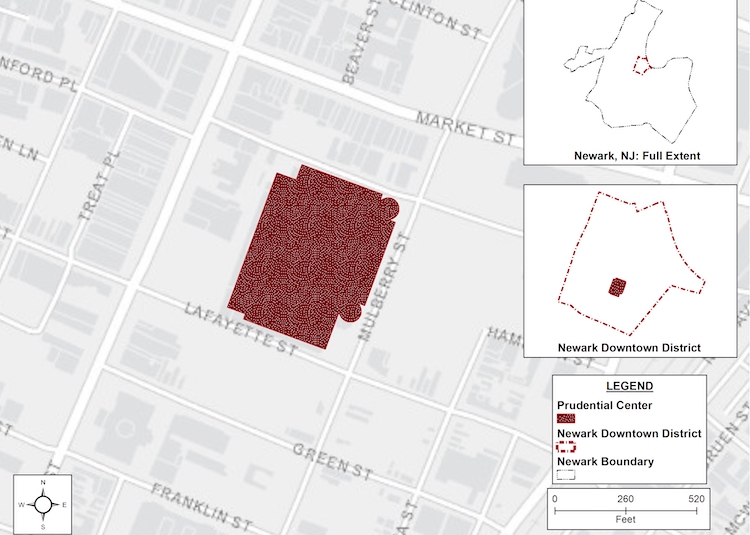
Evidence on the Impact of the Prudential Center on Crime in Downtown Newark

Gian Maria Campedelli, Eric L. Piza, Alex R. Piquero, and Justin Kurland (2023)

Journal of Experimental Criminology

Abstract

Objectives: Evaluate the effects that Prudential Center events had on crime in downtown Newark from 2007 to 2015 in terms of incident counts and spatial characteristics.

Methods: We evaluate the effects of events held at the Prudential Center on crime counts via negative binomial regression. Through the Fasano-Franceschini test, we assess whether crimes that occurred during events spatially differ compared to the incidents in no-event hours. Finally, we employ logistic regression to assess the correlation between crime locations and activity at the center.

Results: Five event types (out of nine) are statistically associated with increases in crime. Spatially, differences in the distribution of incidents when the facility is active partially emerge. Two out of six location types (streets and parking lots) correlate with activity at the center.

Conclusions: The complex array of crime-related effects that the center has on downtown Newark suggests tailored policies discriminating between event and location types for enhancing public safety.

Proactive Monitoring and Operator Discretion: A Systematic Social Observation of CCTV Control Room Operations

Eric L. Piza and Lauren N. Moton (2023)

Journal of Criminal Justice

*Data collection activities were funded by the National Institute of Justice (grant number 2010-IJ-CX-0026)

Key Takeaways

  • Targeted surveillances of known suspects were nearly 8 times longer than surveillances of persons unknown to the CCTV operators
  • Targeted surveillances of known suspects were 49% less likely to involve reasonable suspicion or probable cause
  • Female CCTV operators were 40% more likely than male operators to observe incidents of reasonable suspicion/probable cause
  • Female CCTV operators were over 4 times more likely than male operators to report incidents of reasonable suspicion/probable cause to patrol
  • Visible obstructions to the camera feed were associated with over 9-minute increases in surveillance length and an over four-fold increase in reporting likelihood

Research Summary

Technological advancements have allowed seamless integration of a range of surveillance technologies, making video surveillance a core component of daily police operations around the world. While the increase in evaluation research has provided insight into crime control outcomes associated with CCTV, many procedural and contextual considerations remain under-explored. Of particular importance is the lack of understanding of the human factors that drive surveillance interventions, and how decision-making processes influence the manner in which video surveillance translates to enforcement actions in the field. By and large, research has not analyzed how CCTV operators select which persons to observe or the factors that lead operators to report observed behavior to law enforcement.

The current study is a systematic social observation (SSO) of discretionary CCTV operator actions during the CCTV Directed Patrol Experiment in Newark, NJ. During all patrol shifts, the lead author and two research assistants observed the activity of the CCTV operators and actions of those being surveilled from within the CCTV control room. CCTV camera feeds were displayed on large monitors mounted on the control room walls, allowing the research team to easily view all activity. We coded field notes created by researchers during the SSO to build a database that allowed for a statistical analysis of each targeted surveillance—an observation of an individual or group of individuals lasting one minute or longer—conducted during the CCTV directed patrol experiment.

The analysis tests the effect a range of factors has on (1) the duration of targeted surveillances, (2) whether an incident providing reasonable suspicion and/or probable cause was observed by the CCTV operator, and (3) whether the CCTV operator reported any observed reasonable suspicion and/or probable cause to police. The average targeted surveillance lasted 16.52 minutes, with a standard deviation of 15.85 minutes. An instance of reasonable suspicion or probable cause was observed in 104 (46.22%) cases. Of these 104 cases, the CCTV operator reported the event to the patrol units in 72 instances (69.23%).

Fifty-five (24.44%) targeted surveillances observed a known suspect which may be credited to the focused nature of the intervention, as CCTV operators monitored the same cameras each tour of duty. Targeted surveillances of known suspects were nearly 8 times longer than surveillances of persons unknown to the CCTV operators, but 49% less likely to involve incidents of reasonable suspicion or probable cause. Female CCTV operators were 40% more likely than male operators to observe incidents of reasonable suspicion/probable cause and over 4 times more likely to report such incidents to the police. Operators with a supervisor rank were associated with over 3-minute decreases in targeted surveillance length, but a two-fold increase in observation of reasonable suspicion/probable cause. Visible obstructions to the camera feed were associated with an over 9-minute increase in surveillance length and an over four-fold increase in reporting likelihood.

These findings suggest that organizational culture, CCTV operator characteristics, and land usage of target areas may foster differential surveillance behavior across CCTV operators. As remote strategies for policing continue to expand internationally, the identification of factors that impact discretionary practices is critical.