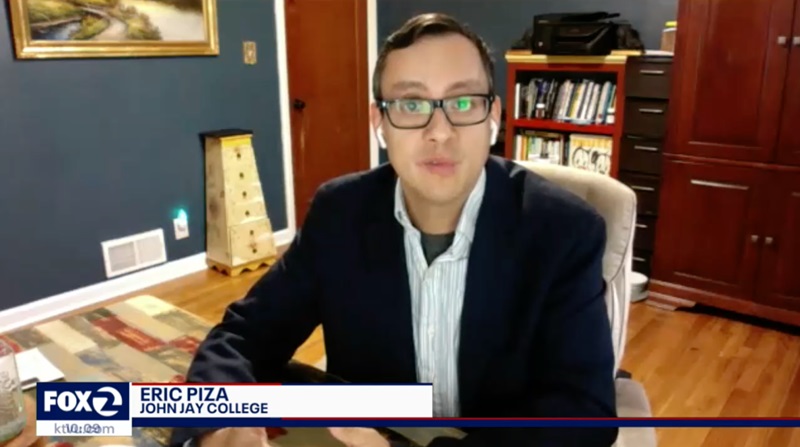
Fox KTVU: Oakland: Homicide Clearance Rates in Oakland
Lipman Family Professor | School of Criminology & Criminal Justice | Northeastern University


The homicide clearance rate in Wisconsin is one of the highest in the country, according to a national nonprofit which tracks the data.
About 72 percent of homicides committed in Wisconsin over the last decade were “cleared” — usually meaning law enforcement filed charges in the case — according to the Murder Accountability Project. That does not mean a conviction was won.
Wisconsin’s murder clearance rate is the eleventh best in the country in that time, according to an analysis of the data by The Badger Project.
The FBI released its annual Uniform Crime Report for 2020 on Monday. Like many states, Wisconsin saw a big increase in homicides in the tumultuous pandemic year of 2020 — from 177 in 2019 way up to 303.
From 2011-2020, the five states with the highest rates of clearing homicides are, starting at the top: Maine, North Dakota, Alaska, South Dakota and Wyoming. The states with the worst rates are, starting at the bottom: Michigan, Rhode Island, Ohio, Indiana, and Massachusetts.
Law enforcement documented more than 1,900 homicides in Wisconsin from 2011-2020, according to the Murder Accountability Project. Nearly 1,400 of those homicides were cleared. That puts Wisconsin’s clearance rate as the fourth-best in states with over 1,000 murders in that time period. In that cohort, only Minnesota, Nevada and North Carolina have higher rates at 73, 73.5 and 76 percent, respectively…

What is it like to truly follow your interests? In this week’s episode, Dr. Eric Piza talks about his transition from an analyst in Newark, New Jersey to a professor and researcher at John Jay College. Eric reflects on his two badges stories: Foot Patrol Hotspots and Video Surveillance. While many research projects broke his heart, this does not discourage him from pursuing his interests. Jason and Eric also have a lengthy discussion on the lack of new key performance indicators in the Compstat process. Eric has a new book entitled Modern Policing Using ArcGIS Pro, and he is currently an associate professor at John Jay College of Criminal Justice…
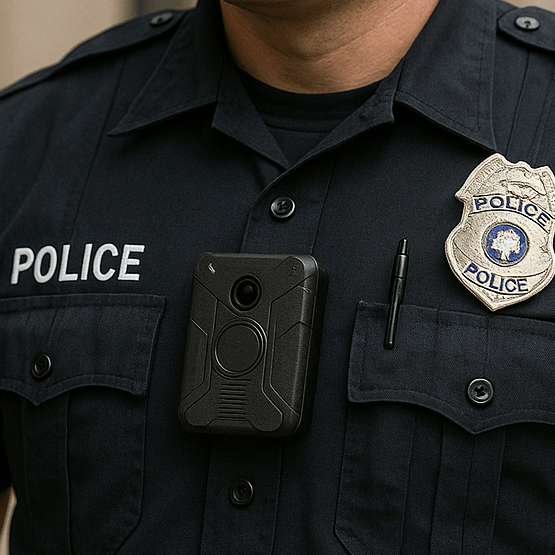
Vijay Chillar, Eric L. Piza, & Victoria A. Sytsma (2021)
Journal of Qualitative Criminal Justice & Criminology
*This study was funded by the Charles Koch Foundation, Policing and Criminal Justice Reform program
Key Takeaways
Research Summary
Video recording technologies provide researchers with modes for observing human behavior in its natural setting. These data sources facilitate a video data analysis (VDA) methodological framework, which focuses on situational dynamics and behaviors to understand how people act and interact. Body-worn cameras (BWCs) are an emerging technology within this framework and allow researchers to overcome various challenges that are inherent in qualitative research. However, the use of BWC footage can present a host of new challenges for researchers to address. This article incorporates a practical example detailing the application of a VDA framework using BWC footage in a research project on police use of force in Newark, NJ.
VDA can overcome concerns about access and individual protections because it does not require direct interaction with subjects, making it preferable in some contexts. This is especially so when protections are taken to prevent researchers from collecting identifying information of research subjects. In the current study, Newark Police Division (NPD) policy requires that officers notify civilians that they are being recorded, alerting them their actions can be viewed in the future. However, civilians are not agreeing to have the recording used for research purposes in these moments. As such, researchers should always ensure the principle of beneficence (i.e., the study’s benefits outweigh the potential risks) is met.
Researchers have finite time to scan an interaction, record relevant variables, and make sense of them in traditional participant observation research. In contrast, the use of BWC footage affords researchers unlimited time which provides opportunity to rigorously interpret the context and setting. The permanent record also navigates problems associated with observer and participant recall error. However, perspective bias has the potential to skew how the viewer interprets such footage. In the current study, video is recorded from only the officer’s perspective. Since NPD requires all officers to wear BWCs, we benefited from having various vantage points of a single event. However, to ensure consistent coding, SSOs should be preceded by in-depth footage reviews, the operationalization of analytical dimensions (i.e., the content of interest), and the creation of data collection protocols and code sheets.
Technical limitations can present a number of challenges to this line of research. In our study, the BWC vendor did not enable video streaming within its software. This required all videos to be downloaded from a central server to an external hard drive kept in a secure location at police headquarters. The inability to view footage remotely precluded the participation of all authors in the coding. To maintain a team approach to coding, the authors regularly met to discuss coding decisions and answer any questions the main coder raised. However, the process would have been much more efficient if the BWC system enabled video streaming. Further, the first 30 seconds of audio were muted in all videos, making communication between officers, dispatchers, suspects or involved parities (which could have contained valuable data for the study) inaudible at the very beginning of each use of force event.
Lastly, BWC footage is time consuming to view, and interactions between humans can be chaotic, fast-paced, and nuanced. Taking careful note of visual cues and context is important, as is having no illusions about the time commitment required to conduct the research. It took approximately 91 hours to download all videos for our study sample, and about 300 hours to systematically view and code the videos. Researchers interested in using BWC footage as a data source should be mindful of the upfront time and resource requirements.

As Lyft driver Cynthia Norman steered a white Chevy through Cleveland’s streets on a cold night in January, the app pinged her to pick up a passenger named “NBA.” She pulled up to the curb in front of a two-story brick apartment complex where two men who looked to be in their 20s were waiting for her. One was wearing a gold hoodie, the other was in a black hoodie; both had on face masks…
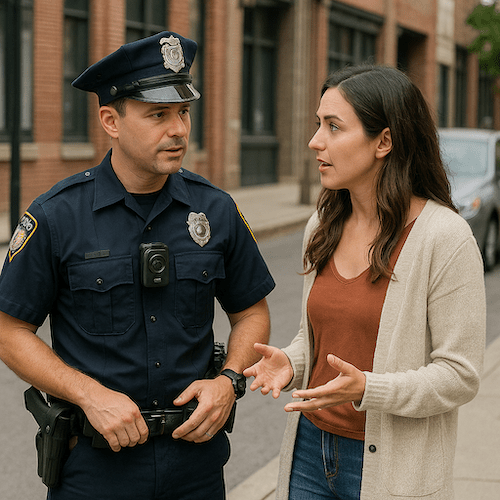
Victoria A. Sytsma, Eric L. Piza, Vijay Chillar, & Leigh Grossman (2021)
Criminal Justice Policy Review
*This study was funded by the Charles Koch Foundation, Policing and Criminal Justice Reform program
Key Takeaways
Research Summary
In May 2011, the U.S. Department of Justice’s Civil Rights Division opened an investigation into the Newark Police Division (NPD) after receiving allegations of civil rights violations by the agency. This investigation found evidence of an unconstitutional pattern or practice of use of force, resulting in a Department of Justice consent decree. The consent decree required the NPD to adopt specific reforms to address the violations, including the deployment of body-worn cameras (BWCs) and revised policies on bias-free policing and use of force.
This study uses BWCs as a performance monitoring tool to measure police officer adherence to these updated policies. Systematic social observation of BWC footage measured police officers’ adherence to procedural justice dimensions informed by the revised NPD policies: officer announcements of BWC, officer explaining the reason for response to the scene, officer addressing suspect concerns, officer allowing suspect to speak, officer displays verbally antagonistic behavior (reverse coded), and officer use of calm and shout commands prior to force.
The study sample consists of 91 use of force events recorded by BWCs between December 2017 through the end of 2018. Use of force events include a period of time preceding and following the use of force incident(s), beginning when the officers are first visibly seen interacting with any involved parties (e.g., suspects, bystanders, or victims). The end of the use of force event can be described as the time at which full suspect compliance is secured.
Officers announced the presence of BWC in 41.76% of cases. In 30.77% of cases, an officer can be observed providing a reason to the suspect as to why the officer responded to the scene. In 42.86% of cases, an officer explained to the suspect why they were being detained. In 65.93% of cases, the suspect attempted to speak for the purpose of expressing their views with officers allowing suspects to speak in 76.67% of those cases and attempting to answer suspect questions in 75% of those cases. In 36.26% of cases, at least one officer displayed verbally antagonistic behavior toward the suspect, which indicates low compliance with policy directives calling for officers to “be courteous, respectful, and professional.”
An officer gave the suspect a calm command in 78.02% of cases. Suspects complied with calm commands in 23.94% of cases, showing suspect compliance to be low. In 53.85% of cases, an officer gave the suspect a shout command with suspect compliance also low for this dimension (22.45% compliance). Results around commands suggest that, despite suspects often not complying, many officers are quite committed to verbal directives and to remaining calm in their delivery of a command. Results further indicate most officers adhere to the NPD policy of using escalating verbal commands before resorting to physical force.
A 7-point procedural justice scale combining the overall dimensions found that use of force events do trend toward more procedurally just. However, while most of the sample (58%) scored between 4 and 7 on the procedural justice scale, a substantial portion (42%) are below the median and nearly 18% of cases have a score of 0 or 1. These results paint a more general picture of officer actions relative to the specific indicators and suggest officer conduct could be improved during use of force events.

David N. Hatten & Eric L. Piza (2021)
Journal of Research in Crime & Delinquency
Key Takeaways
Research Summary
There is a well-documented belief among some police practitioners that, despite their best efforts, crime will simply move to another area and/or time in response to targeted crime prevention interventions. While much empirical research reports that crime displacement is rare, a number of other studies indicate the absence of displacement is far from guaranteed. Based on prior reviews of the research literature, 26% of studies reported displacement effects of some kind, a sizable minority.
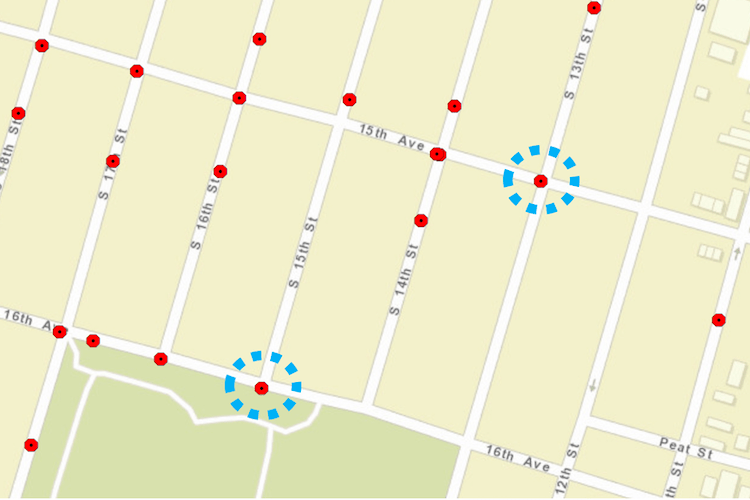
The current study contributes to the literature on crime displacement through a follow-up analysis of the Newark Police Department’s (NPD’s) Operation Impact, a foot-patrol intervention. The original evaluation of Operation Impact found the foot patrols generated a significant reduction of overall violence, but robbery suffered from both spatial and temporal displacement. The current analysis focuses on street segments comprising the Operation Impact target area, control area, and catchment zone (used to measure spatial displacement). On each street segment, crime generators and attractors (CGAs) (bus stops, corner stores, known gang territory, at-risk housing complexes, and non-local roads), household-level measures of disadvantage (poverty, residential mobility, and home ownership), and crime incidents were measured. Regression models then tested the level to which each CGA and household characteristic influenced the spatial and temporal displacement of robbery.
Three separate analyses were conducted. Model 1 focused on post-intervention robbery activity in the catchment area. Model 2 focused on both spatially and temporally displaced crime by testing the effect on crime in the catchment area occurring during non-operational hours of the intervention. Model 3 tested the effect on temporal displacement, focusing on crime in the target area during the non-operational hours.
Model 1 found that robbery increased 35% within catchment area street segments containing a bus stop. This contrasts with the effect of bus stops in the study area generally, with the presence of bus stops associated with a 15% decrease in robbery. Non-local roads in the catchment area were associated with a 25% increase in robbery levels. However, non-local roads were also associated with heighted robbery levels throughout the study area.
Model 2 found that robbery activity increased 24% during non-operational time periods within the catchment area street segments containing bus stops. Throughout the entire study area bus stops were again associated with decreased robbery levels. During non-operational periods, residential mobility was associated with an 8% robbery increase in catchment area street segments. Residential mobility did not have a significant effect on robbery in the study area as a whole.
Model 3 found that robbery activity decreased 28% in target area street segments containing a corner store during non-operational time periods. Corner stores were associated with 14% increase in robbery levels during non-operational hours throughout the entire study area. Every 1 standard deviation increase in NPD enforcement actions resulted in a 4% increase of robbery in target area street segments during non-operational time periods.
The findings support the notion that specific features of the environment can influence the occurrence of displacement, even if they do not influence the occurrence of crime more generally.

It has been almost a year and a half since Ariane McCree was shot dead by police in a Walmart parking lot, handcuffed and in possession of a gun, but his family still has a host of unanswered questions.
McCree, 28, had raced out of the Walmart in Chester, South Carolina, a small town an hour north of Columbia, after he was placed in handcuffs when he was accused of stealing a $45 lock in November 2019, police said.
But exactly what happened next remains unclear in part because the responding officers didn’t activate their body cameras until after McCree, a Black father and former high school football star, was gunned down in a hail of police bullets.
“A lot of things do not add up,” his cousin, Tabatha Strother, told NBC News. “But we would have known a lot of this if the bodycam was on.”

In Onondaga County, at least 10 of the county’s 15 police departments — including the Syracuse Police Department — use the cameras.
But the Onondaga County Sheriff’s Office, the second-largest police force in the county, does not use body cameras and has no plans to add them.
Why?
It’s not a priority, Sheriff Eugene Conway told Syracuse.com | The Post-Standard.
Conway said the cameras are expensive and he wants to spend money on other things such as bulletproof vests, stun guns and patrol cars as well as filling empty positions. The sheriff said there are no discussions or plans under way to add body cameras.
“Body cameras are important,” Conway said. “But where do they fall in the overall necessity?”
Have a WordPress.com account? Log in now.