WSHU Public Radio: Advocates call Suffolk County’s long hidden body camera policy ‘useless’

After much resistance, Suffolk County publicly released its policy on how it uses body cameras. The long-sought policy raises several concerns for civil rights advocates, experts, and lawmakers. The release comes three weeks after police officers were seen on a body camera kicking a handcuffed suspect.

The policy allows police officers to view footage before writing an arrest report, doesn’t explicitly require supervisors to view footage after a major incident, and gives officers discretion when to use — or not use — the camera.

Irma Solis, the director of the Suffolk chapter of New York Civil Liberties Union, says giving police the discretion to turn the cameras on or off makes them “useless.”

“If they are given the discretion to activate it or not, the likelihood of them using their discretion to not turn it on is much higher,” she said.

In an interview, she said a better policy would have less “wiggle room” and more explicitly state when police are required to activate the camera during interactions with the public.

“Because we’re able to see everything that happened, not just what the officer wanted us to see,” Solis said…

Chicago Sun Times: Former suburban cop hopes to cash in on new body-camera law in Illinois

A former suburban cop aims to capitalize on a new Illinois justice reform law that will require every officer in the state to have a body camera by 2025.

Ben Laird retired about three years ago as a River Forest police detective. Now, Laird, who has an MBA and a college degree in information services, runs Frontline Public Safety Solutions, which sells software to police departments around the country — including its latest product, a computer platform for police supervisors to audit body-camera footage.

Dozens of suburban Chicago departments have signed up, according to Laird, who says his system lets them see which officers need training or discipline…

IPVM: CCTV Researcher Eric Piza Interviewed

Few academic researchers study video surveillance / CCTV. One of the most notable is John Jay College of Criminal Justice, City University of New York associate professor Dr. Eric Piza who we interviewed. This interview is part of a running series of IPVM interviews of professionals of note. For previous IPVM interview coverage, please see…

IPVM Surveillance News source: Mexico City Public Video Surveillance Faces Scrutiny

Do large-scale, multimillion-dollar safe city projects stop crime? If not, what is the point in selling the cameras in the first place?

Tens of thousands of video surveillance cameras are currently operational in Mexico City and the adjacent State of Mexico. IPVM interviewed industry and local sources and examined official Mexican crime statistics, finding no clear link between more cameras and less crime, despite politicians’ promises to the contrary.

This post is part of IPVM’s expanded Latin America coverage. For recent IPVM Mexico coverage, please see…

Scripting Police Escalation of Use of Force Through Conjunctive Analysis of Body-Worn Camera Footage: A Systematic Social Observational Pilot Study

Victoria A. Sytsma, Vijay Chillar, & Eric L. Piza (2021)

Journal of Criminal Justice

*This study was funded by the Charles Koch Foundation, Policing and Criminal Justice Reform program

Key Takeaways

  • Body-camera footage and video data analysis enable the in-depth observation of officer, suspect, and by-stander behavior
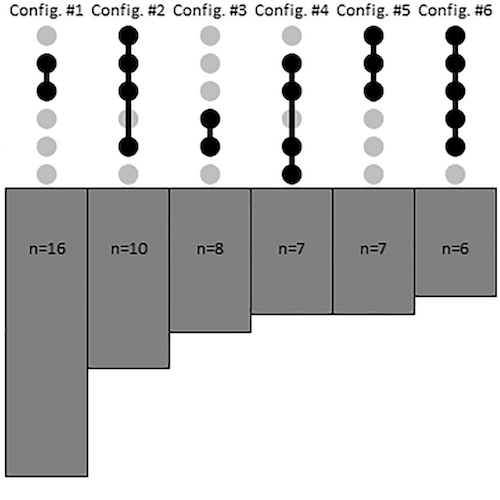
  • Conjunctive analysis of case configurations is a promising method for script analysis
  • Dominant police officer action configurations include procedurally just interactions
  • Evidence of suspect impairment was an important contributor to risk of force escalation
  • Presence of a victim may inflame the situation
  • Non-antagonistic bystanders may civilize the situation
  • The highest risk configurations include older police officers

Research Summary

Crime scripts organize crime events into sequential stages leading to a specifiable goal. This creates a procedural script that provides a functional explanation of the behavior in question. More recent research has broadened script analysis to include subject actions, targets of such actions, as well as the totality of the relevant environment, situation or setting.

This exploratory study uses script analysis to describe a series of varying dominant configurations of choice-structuring properties related to escalation of police use of force. We rely on systematic social observation (SSO) of police use of force cases captured on police body-worn cameras to identify actions and environmental characteristics present during the use of force event. We then use conjunctive analysis of case configurations (CACC) to identify dominant case configurations of police officer and suspect actions, demographic characteristics, and environmental characteristics. CACC was also used to determine the relative risk of use of force escalation from soft empty-hand force to more severe forms of force based on case configuration.

The study sample consists of 91 use of force events recorded by BWCs between December 2017 through the end of 2018. Use of force events include a period of time preceding and following the use of force incident(s), beginning when the officers are first visibly seen interacting with any involved parties (e.g., suspects, bystanders, or victims). The end of the use of force event can be described as the time at which full suspect compliance is secured, making the likelihood of physical force minimal. We classified 18 variables across three classifications: officer action points, suspect actions points, and environmental characteristics. Video data was supplemented by NPD arrest records to ascertain gender, ethnicity, and age of officers and suspects.

Results indicate that the overall escalation risk (from open hand use of force to more serious use of force) was 63.74%. Two of the dominant officer action configurations surpass this overall risk substantially and both include officers giving a shout command, with and without also giving a calm command. The officer action profile with lowest risk of force escalation is also the profile containing the most actions indicative of a procedurally just interaction. These results point to the efficacy of officer use of persistent calm commands and behaving in a procedurally just manner for reducing risk of escalation.

Evidence of drug or alcohol impairment of the suspect appears to be one of the most important contributors to risk of escalation. Suspect physical antagonism does not predict escalation when elements such as weapon, suspect flee, and suspect drug or alcohol impairment are also absent. While daytime may elevate risk of escalation, such an effect may be mitigated by the presence of a non-antagonistic bystander. These results suggest that certain types of bystanders can have a civilizing effect on suspects.

The highest risk configurations include older officers and the lowest risk profiles include younger officers. Older or more experienced officers may be resistant or not exposed to cultural shifts in policing, as well as procedural justice and crisis intervention training. However, although older officers increase risk of escalation, when those officers are white, the risk decreases to below the overall risk of escalation.

Police Officers’ Best Friend?: An Exploratory Analysis of the Effect of Service Dogs on Perceived Organizational Support in Policing

Kenneth M. Quick & Eric L. Piza (2021).

The Police Journal: Theory, Practice and Principles

Abstract

This study explored the effectiveness of a novel technique for police departments to support their officers and promote wellness: the use of service dogs. We evaluated officer perceptions in two mid-sized, municipal police departments that have wellness programs with a service dog that is permanently assigned to a full-time police officer handler: Groton and Naugatuck, Connecticut. We assessed six factors believed to influence police officer wellness including: operational and organizational stress using the Police Stress Questionnaire; topical stressors including those related to the COVID-19 pandemic, police use of force and community relations, and police reform efforts; Perceived Organizational Support (POS); receptivity to service dogs; and willingness to seek as- sistance for mental health issues. We found evidence that exposure to service dogs is significantly linked to both POS and receptivity to service dogs in policing. We also found that officer willingness to seek their department’s assistance regarding mental health approaches significance with greater exposure to the service dog (p = .07). Although we found no significant evidence that exposure to service dogs is linked to stress reduction, we found that police reforms pose a substantial perceived stress on officers in the study. This finding presents a serious challenge for reformers that risks undermining officer wellness. Implications of our findings and recommendations for future research are discussed.

How Can Embedded Criminologists, Police Pracademics, and Crime Analysts Help Increase Police-Led Program Evaluations? A Survey of Authors Cited in the Evidence-Based Policing Matrix

Eric L. Piza, E., Jason Szkola, & Kwan-Lamar Blount-Hill, K. (2021)

Policing: A Journal of Policy and Practice, 15(2): 1217-1231.

Key Takeaways

  • Lack of support from leadership and mid-level managers identified as most damaging factors to police research
  • Crime analysts identified as easiest to incorporate into program evaluation efforts
  • Embedded criminologists identified as having the strongest research and evaluation skills
  • Police pracademics identified as best equipped to explain research results to practitioners
  • Overall, survey responses indicate embedded criminologists, police pracademics, and crime analysts may each have a unique (and important) role in police-led science

Research Summary

Evidence-based policing relies on rigorous program evaluation to catalog “what works” in crime control and prevention. Program evaluation has traditionally been considered the responsibility of academic researchers.  Scholars have recently called for the field to move more towards a model of police-led science, in which police are empowered to conduct research and disseminate findings throughout the field.

Three entities have emerged as potential avenues for increasing police capacity to conduct rigorous program evaluations: embedded criminologists, police pracademics, and crime analysts. Embedded criminologists are outside academic researchers who take an active role in the day-to-day routine of the police, typically spending at least a portion of their time on-site at the agency.  Police pracademics are active police officers who have received the necessary (typically graduate level) academic research training to lead research projects. Crime analysts are police department staff members who systematically analyze data to provide information to police commanders to make policing more efficient and effective.

The aim of this study was to explore the relative strengths of these three entitles in terms of increasing police capacity to conduct program evaluations. We explored these issues through a survey of scholars who authored or co-authored one or more studies included in the Evidence-Based Policing Matrix (https://cebcp.org/evidence-based-policing/the-matrix/), a research translation tool that organizes evaluations of police interventions. The survey was sent to the 146 study authors with active email addresses. 83 of the 146 (57%) authors completed the survey.

Respondents identified lack of support from police leadership and mid-level managers as the most damaging factors to police research. The two least damaging factors were lack of police personnel proficient in research and competing goals and incentive structures of academics and police.

Respondents identified crime analysts as the easiest to incorporate into program evaluation activities and embedded criminologists as the most difficult. Embedded criminologists were identified as having the strongest research ability and crime analysts the weakest. Police pracademics were identified as best able to translate research for practitioner audiences. Embedded criminologists and crime analysts were considered equally capable in this task.

Open-ended responses suggested; (1) while respondents looked at embedded criminologists positively, they were skeptical of their ability to drive internal change within police agencies; (2) police pracademics can be a driving force in research translation but may lack the technical skills to lead program evaluations; (3) crime analysts have high levels of technical expertise but may not be positioned to drive change because of their general lack of status within police agencies. The overall findings suggest embedded criminologists, police pracademics, and crime analysts each have an important, distinct role to play in police-led science. The benefits to police-led science can be maximized by expanding training opportunities for crime analysts, entrusting police pracademics to develop an agency’s research agenda, and incorporating embedded criminologists within an action research framework to expose crime analysts and police pracademics to rigorous program evaluation activities.

Crime Control Effects of a Police Substation Within a Business-Improvement District: A Quasi-Experimental Synthetic Control Evaluation

Eric L. Piza, Andrew P. Wheeler, Nathan T. Connealy, & Shun Q. Feng (2020)

Criminology & Public Policy, 19(2): 653-684.

*This study was funded by the Professional Staff Congress – The City University of New York.

Key Takeaways

  • The Newark Police Department opened a police substation in their downtown district in 2012
  • The substation had the strongest effect on motor vehicle theft, with significant reductions also observed for burglary
  • Robbery and theft from auto experienced significant spatial displacement
  • Quality-of-life summonses and directed police patrol significantly increased in the target area
  • Parking summonses significantly decreased in the target area
  • The effect of the substation was heightened when proactive policing activities increased in the target area

Research Summary

In Sept. 2012, a partnership between the Newark Police Department (NPD) and Newark Downtown District (NDD) culminated in the opening of a police substation in downtown Newark. NPD’s Metro Division uses the substation as its headquarters and has primary responsibility for policing a 0.35 square-mile target area within downtown Newark. Coinciding with the opening of the substation, the NDD increased its number of quality-of-life ambassadors, uniformed civilian personnel who travel throughout downtown Newark on foot to identify and rectify problems that may impact the community. The NDD also funded the renovation of the building space, paid the mothy rent of the substation, and added a crime analyst position to its staff to assist the NPD in tracking crime trends in the downtown area.

The microsynthetic control method (i.e. microsynth) was used to evaluate the effect of the substation on crime. Microsynth ensures the cumulative treated and control units have identical pre-intervention crime trends and are statistically equivalent across covariates that may influence crime. Microsynth measures treatment effect through a difference-in-difference estimate of post-intervention crime counts in the treated area compared to the control area.

To measure the effect of the substation over time, as well as to account for the evolving nature of the partnership, our analysis estimates effect across two distinct time periods: (1) the initial 3-year program period (Sept. 2012 – Aug. 2015) and (2) the period following the expiration of the MOU between NPD and NDD (Sept. 2015 – Aug. 2018).

We tested the effect of the substation on six crime types: aggravated assault, burglary, murder, theft from auto, motor vehicle theft, and robbery. We were also interested in identifying potential causal mechanisms of the observed findings, and included six police activities in a process evaluation: arrests, field interrogations, quality-of-life (QOL) summonses, directed police patrols, motor vehicle parking summonses, and motor vehicle moving summonses.

The strongest crime control  effects were observed for motor vehicle theft, which significantly reduced in both of the 3-year post intervention periods. Burglary also reduced during the Sept. 2012 – Aug. 2015 time period. While robbery counts in the target area did not significantly change in the postintervention period, spatial displacement effects (i.e. a significant increase in the catchment zone surrounding the target area) occurred. From Sept. 2015- Aug. 2018, the significant reduction of theft from auto in the target area was offset by a significant increase in the catchment zone. From Sept. 2015 – Aug. 2018, QOL summonses and directed patrols significantly increased, and parking summonses significantly decreased. During this same time period, the motor vehicle theft decrease nearly tripled from the Sept. 2012 – Aug. 2015 period (-88 to -252). Silver linings can also be seen in the crime increases, as the robbery increase from Sept. 2015 to Aug. 2018 (57) was less than half of the Sept. 2012 to Aug.2 015 increase (148).

The opening of NPD’s substation resulted in an increase in visible police presence accompanied by increases in proactive policing activities, which impacted motor vehicle theft and burglary. This suggest substations that facilitate proactive policing may help prevent these crime types.  Agencies wishing to address robbery and theft from auto may have to design substation strategies in a manner that better influences offender decision-making in order to prevent spatial displacement.

CCTV Surveillance for Crime Prevention: A 40-Year Systematic Review with Meta-Analysis

Eric L. Piza, Brandon C. Welsh, David P. Farrington, & Amanda L. Thomas (2019)

Criminology & Public Policy, 18(1): 135-159

*This study was funded by the Swedish National Council for Crime Prevention

Key Takeaways

  • CCTV was associated with a ~13% reduction of crime in target areas as compared to control areas
  • Effects were strongest in car parks followed by residential areas
  • Of the countries where CCTV evaluations were conducted, the strongest effects were observed in United Kingdom and South Korea
  • Schemes incorporating active camera monitoring had larger effects than passive systems
  • Schemes deploying multiple interventions alongside CCTV had larger effects than schemes deploying single or no other interventions

Research Summary

This study updates prior systematic reviews and meta-analyses testing the effect of CCTV video surveillance cameras on crime. Systematic reviews incorporate rigorous and transparent methods for locating, appraising, and synthesizing scientific evidence from prior evaluation studies. Meta-analysis is a statistical technique that combines results from multiple evaluations into a single weighted average effect size.

We searched for CCTV evaluations published from 2007 through 2017 to account for the time period since the last review. The authors identified 68 CCTV evaluations from this time period. Considering these evaluations alongside those identified in the prior CCTV reviews, this study included a total of 161 CCTV evaluations conducted between 1978 and 2017.  80 evaluations met the inclusion criteria with 76 providing the necessary data for the meta-analysis.

Overall, CCTV was found to have a modest but significant effect on crime. Crime decreased by ~13% in CCTV areas as compared to control areas.

CCTV effect was compared across six geographic settings: car park (n=8), city/town center (n=33), housing complex (n=10), residential area (n=16), public transport (n=4), and other setting (n=5). The largest effects were observed for car parks, with CCTV areas experiencing a significant crime reduction of ~37% as compared to control areas. A significant reduction of ~12% was observed in residential areas as compared to control areas.

The analysis also tested whether the effect of CCTV differed across countries: United Kingdom (n=34), United States (n=24), Canada (n=6), South Korea (n=3), Sweden (n=3), Norway (n=1), Spain (n=1), Poland (n=2), and Australia (n=1). For the meta-analysis, Norway, Spain, Poland, and Australia were grouped together as “other country.” Significant reductions of approximately 21% and 34% were observed for the United Kingdom and South Korea, respectively. However, the United Kingdom findings did not lose significance when a more conservative effect size was used while the South Korea findings lost significance with the more conservative measure. Additionally, the South Korea findings warrant caution given the small number of studies conducted in this country (3) as compared to the United Kingdom (34). No other country exhibited any significant effects.

65 studies reported the type of monitoring used in CCTV schemes as active (n=54) or passive (n=11). Active systems were associated with an approximate 15% reduction in crime while no significant effects were observed for passive systems. Schemes reporting the deployment of multiple interventions (n=14) alongside CCTV generated an approximately 34% reduction of crime in treatment areas as compared with in control areas. No significant effects were observed for schemes reporting either none (n=36) or one other intervention (n=26) alongside CCTV.

The increase in CCTV evaluations has improved the knowledge base around the crime prevention effect of the technology. While overall findings suggest a modest but significant effect on crime, important geographic and strategic aspects of CCTV schemes influence the likelihood of success. Public safety agencies should take these considerations into account when designing their CCTV programs. Future research should aim to incorporate rigorous evaluation designs to ensure the policy relevance of CCTV evaluation studies. 

Predicting Initiator and Near Repeat Events in Spatiotemporal Crime Patterns: An Analysis of Residential Burglary and Motor Vehicle Theft

Eric L. Piza & Jeremy G. Carter, J. (2018)

Justice Quarterly, 35(5): 842-870

*This study was supported by the Central Indiana Community Foundation, grant # 0000018207

Key Takeaways

  • Near-repeat patterns  were observed for both motor vehicle theft and residential burglary
  • ~28% of motor vehicle thefts and ~37% of residential burglaries were part of a near repeat chain
  • Near repeat residential burglary patterns were most salient in the 4 days following an initiator event
  • Near repeat motor vehicle theft patterns were equally salient in the 4-day and 7-day periods following an initiator event
  • Social disorganization and geographic edge measures predicted whether events were part of near repeat chains for both motor vehicle theft and residential burglary
  • Crime generators predicted whether events were part of near repeat chains for motor vehicle theft

Research Summary

Near repeat analysis has emerged as a method for identifying clusters of crime events that occur closely in both space and time. Recent research has classified crime events based upon their role in spatiotemporal clusters and identified locations most at risk of near repeat patterns.

This study sought to identify the environmental factors that predict whether a crime event is an initiator (first event in a near repeat chain) or near repeat (subsequent event in a near repeat chain) event. Accurately forecasting, and preventing, initiator events offers enhanced crime control benefits, as additional incidents that may have occurred subsequently are also prevented.

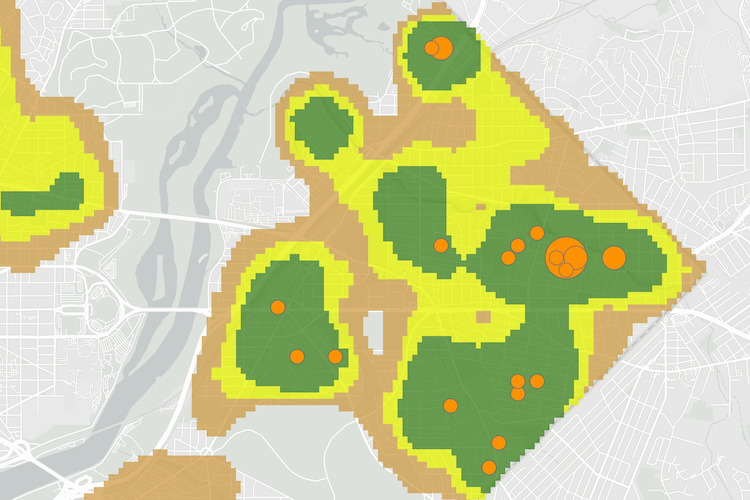
This study used data on motor vehicle theft and residential burglary events occurring in Indianapolis, IN during 2013. For both crime types, we conducted an analysis of spatiotemporal clustering using the near repat calculator (https://www.jratcliffe.net/near-repeat-analysis). We used a spatial bandwidth of 1-block in the analysis, and repeated the analysis using 3 different temporal bandwidths: 4 days, 7 days, and 14 days.

For residential burglary, near repeat patterns were most salient in the 4-day model.  The strongest effects occurred in the 1-block band, with near repeat residential burglary patterns 78% higher than what is expected by chance. Out of the 11,536 residential burglaries, the near repeat calculator identified 2,536 (~22%) as initiator events and 1,712 (~15%) as near repeat events.

For motor vehicle theft, near repeat patterns were equally salient in the 4-day and 7-day models. The strongest effects occurred in the 1-block band with near repeat events more than 45% greater within 4-days and 53% greater within 7-days than what is expected by chance. Out of the 4,991 motor vehicle thefts, the near repeat calculator identified 802 (~16%) as initiator events and 592 (~11%) as near repeat events.

Multinomial logistic regression identified variables significantly related to the occurrence of initiator and near repeat events. For residential burglary, concentrated disadvantage, geographic mobility, housing density, and racial heterogeneity were significantly associated with an increased likelihood of a crime being a near repeat or initiator event. Proximity to railroad tracks was associated with a decreased likelihood of a residential burglary being a near repeat or initiator event while proximity to a river was associated with an increased likelihood.

For motor vehicle theft, incidents occurring in close proximity to ATMs & Banks were more likely to be near repeat or initiator events. Concentrated disadvantage, geographic mobility, housing density, and racial heterogeneity were each significantly associated with an increased likelihood of being a near repeat or initiator event. Close proximity to a river was associated with decreased likelihood of a motor vehicle theft being an initiator event.

Findings highlight the importance of spatial context to near repeat patterns. Theoretical concepts from environmental criminology play a role in understanding the occurrence of near repeat and initiator events, but in a much more nuanced manner than social disorganization theory. Overall, social disorganization measures predicted an increased likelihood of near repeat and initiator events while environmental criminology measures were associated with both increased and decreased likelihood.