
NBC News I-TEAM Exclusive: Tricked Out & Dangerous

The Criminogenic Effect of Marijuana Dispensaries in Denver, Colorado: A Microsynthetic Control Quasi-Experiment and Cost-Benefit Analysis

Connealy, N., Piza, E. and Hatten, D. (2020)
Justice Evaluation Journal, 3(1): 69-93
Study Abstract
The study analyzed the criminogenic effect of legalizing recreational marijuana dispensaries in Denver. Street segments with recreational dispensaries experienced no changes in violent, disorder and drug crime but did experience an 18% increase in property crime, and street segments adjacent to recreational dispensaries experienced some notable (but non-significant) drug and disorder crime increases. Medical dispensaries demonstrated no significant crime changes. A cost-benefit analysis found the associated crime costs were largely offset by sales revenue. Monetary benefits were much less pronounced, and barely cost effective, when only considering tax revenue.
The Sensitivity of Repeat and Near Repeat Analysis to Geocoding Algorithms

Haberman, C., Hatten, D., Carter, J. and Piza, E. (2021)
Journal of Criminal Justice, 73: 1-12
Study Abstract
Purpose: To determine if repeat and near repeat analysis is sensitive to the geocoding algorithm used for the underlying crime incident data.
Methods: The Indianapolis Metropolitan Police Department provided 2016 crime incident data for five crime types: (1) shootings, (2) robberies, (3) residential burglaries, (4) theft of automobiles, and (5) theft from automobiles. The incident data were geocoded using a dual ranges algorithm and a composite algorithm. First, descriptive analysis of the distances between the two point patterns were conducted. Second, repeat and near repeat analysis was performed. Third, the resulting repeat and near repeat patterns were compared across geocoding algorithms.
Results: The underlying point patterns and repeat and near repeat analyses were similar across geocoding algorithms.
Conclusions: While detailing geocoding processes increases transparency and future researchers can conduct sensitivity results to ensure their findings are robust, dual ranges geocoding algorithms are likely adequate for repeat and near repeat analysis.
Private Security and CCTV Surveillance: A Systematic Review of Function and Performance

Welsh, B., Piza, E., Thomas, A. and Farrington, D. (2020)
Journal of Contemporary Criminal Justice, 36(1): 56-69

Research Brief
Open Access Post Print
Published Article
PAGE UNDER CONSTRUCTION: Article description to be added soon.
Modern Policing using ArcGIS Pro
by Piza, E. and Baughman, J.
Redlands, CA: Esri Press. (In Progress, Under Contract)
PAGE UNDER CONSTRUCTION: Book description to be added soon.
Environmental Factors Influencing Urban Homicide Clearance Rates: A Spatial Analysis of New York City
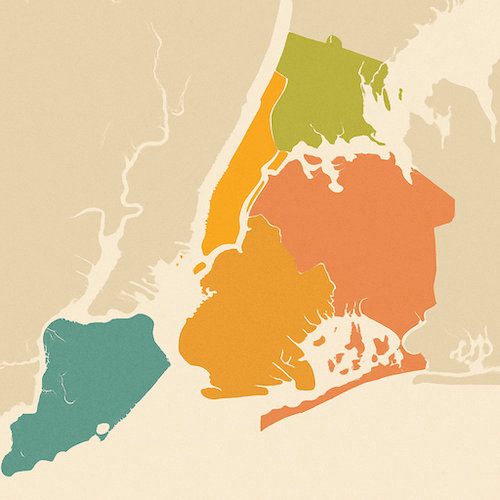
Kennedy, L., Caplan, J., Piza, E. and Thomas, A. (2020)
Homicide Studies, DOI: 10.1177/1088767920976183
Abstract:
In this paper, we explore the conditions under which clearance rates improve by
looking at the experience across New York City. Using one agency provides a control
on the administrative differences that appear across other jurisdictions that have
been studied, usually through cross-national analysis. Our analysis uses Risk Terrain Modeling (RTM) to identify environmental features that relate to closed versus open homicide cases using two years of New York City Police Department (NYPD) data. This analysis is supplemented with an investigation of precinct-wide social structure variables to examine how context matters in influencing closure rates.
John Jay Research: Eric Piza is Bringing the Data on Police Reform

Police reform is everywhere in the news, and everyone has a different perspective on the issue, from activists to police practitioners to politicians. John Jay Associate Professor of Criminal Justice Dr. Eric Piza is a former crime analyst who studies both police reforms — like the impact of body-worn cameras on police effectives — and the manner in which those reforms are undertaken. He emphasizes the importance of program evaluation in the area of police reform: “Far too often, people talk about implementing specific reforms without acknowledging whether or not we have a sufficient evidence base to know whether those reforms will bring about the intended effects.”
Pavementpieces.com: Criminologists question what it means to “defund the police”

Cutting the NYPD police budget by $1 billion is not enough for protesters and advocacy groups, but three criminologists from the city’s John Jay College of Criminal Justice said defunding the police is not going to be easy.
“Defunding the police is kind of one of those generic terms that means different things for different people,” said Dennis Kenney a criminal justice professor at John Jay College and a former Florida police officer. “Shutting down the NYPD would be a bit of a disaster. They’re talking about somebody else taking over the responsibilities that the police handle.”
Advocates and protesters contend that allocating funds to social services could improve mental health, addiction and homelessness in different communities, and that it is a better use of taxpayer money…
Newsday: Village police department approves body cameras for officers

Village police department approves body cameras for officers…
 Eric L. Piza, Ph.D.