The Impact of Suspect Resistance, Informational Justice, and Interpersonal Justice on Time Until Police Use of Physical Force: A Survival Analysis

Eric L. Piza and Victoria A. Sytsma (2022)

Crime & Delinquency

*This study was funded by the Charles Koch Foundation, Policing and Criminal Justice Reform program

Key Takeaways

  • Systematic social observation of body-worn camera footage and survival analysis tested the effect of suspect resistance and officer adherence to informational and interpersonal justice on time until police use of physical force
  • Officer adherence to informational justice was significantly associated with longer time until both first use of force and highest level of force
  • Suspect weapon possession was significantly associated with shorter time until use of the highest level of force
  • Suspect resistance did not achieve statistical significance in any model
  • Overall results suggest police officer actions more greatly influence time until force than does suspect resistance

Research Summary

While colloquial discussions of police use of force revolve around notions of “split-second judgments” such a framework may not reflect the reality of use of force events. Police-citizen encounters involving force typically extend across fairly lengthy time periods, with successive actions and reactions of officers and citizens influencing the likelihood of force. Empirical perspectives from psychology further explain how use of force events unfold over time. System 1 thinking involves quick, subconscious decisions. This contrasts with system 2 thinking, which consists of slower, more deliberate modes of processing information and determining a course of action. Within the context of use of force, police should operate with the goal of minimizing the need for system 1 thinking to allow for the careful deliberation that classifies system 2 thinking.

Suspect actions can impede officer de-escalation efforts in a manner that requires increased use of system 1 thinking. Suspect resistance has received perhaps the most empirical attention as a factor that significantly impacts police officer decisions to use force. Prior research demonstrates an empirical link between suspect resistance and police use of force.

Using tactics that “create time” can help officers delay the need for physical force. A point of emphasis in de-escalation involves officer adherence to procedural, interpersonal, and informational justice principles. Procedural justice refers to the perceived fairness of the procedures involved in decision-making and implementation. Interpersonal justice refers to officers treating civilians with respect and dignity and informational justice refers to providing civilians with information that is accurate and useful.  Dimensions of fairness are difficult to examine at the situational level because they are largely perception-based and heavily influenced by social contextual factors. In contrast, indicators of interpersonal and informational justice are particularly useful avenues for exploring possible situational-level impacts as these forms of justice are more amenable to observation.

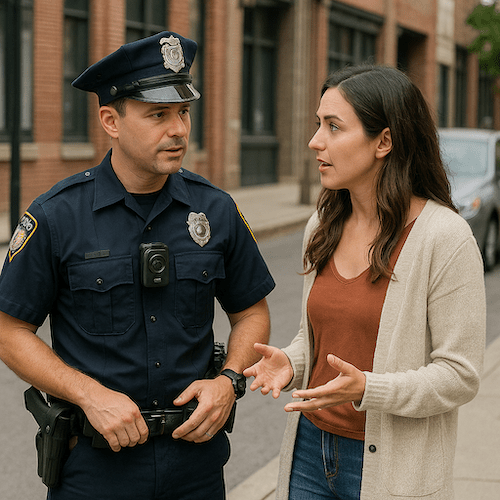
The current study tests the effect of suspect resistance and police officer adherence to interpersonal justice (i.e. officer not using verbally antagonistic language) and informational justice (i.e. officer explaining reason for the encounter to the suspect) on time until use of force in police-citizen encounters. The study involves the systematic social observation of 91 use of force events recorded by BWCs between December 2017 and December 2018 in Newark, NJ. Four cases were removed because the start point and failure points occurred at the same time, bringing the final sample to 87 cases.

The analysis focused on two separate dependent variables: time until first use of physical force and time until use of highest level of force. Models controlled for suspect weapon possession, officer ethnicity, suspect ethnicity, and the type of physical force used (highest observed).

Police officer adherence to informational justice significantly increases time until the first use of physical force and the highest level of physical force. In cases in which the officer explained to the suspect why the suspect was being detained, the median time until first use of physical force is 3.33 minutes, compared to 0.83 minutes for those in which an explanation was not given. In cases in which the officer explained to the suspect why the suspect was being detained the median time until the highest level of force was used is 5.5 minutes, compared to 1.5 minutes for those in which an explanation was not given. Suspect weapon possession was also statistically significant, decreasing time until the highest level of force is used. The median time until highest level of force is 3.17 minutes when there is no weapon and 1.17 minutes when the suspect is in possession of a weapon. Suspect resistance is not significant in any of the models.


The Irony of Paywalled Articles Is They Can Be Made Open Access for Free

Scott Jacques & Eric L. Piza (2022)

Originally published in March 2022 edition of ACJS Today. Reproduced with permission.

The field of criminal justice (CJ) uses research, education, and outreach to make the world better. CJ scholars have become increasingly concerned with applied science, whereby research findings are widely disseminated and used to positively impact the CJ system. The Academy of Criminal Justice Sciences (ACJS) serves this mission by captaining three journals: Justice Quarterly (JQ), The Journal of Criminal Justice Education (JCJE), and The Justice Evaluation Journal (JEJ). Their articles advance what’s known about the CJ system, education, and research itself. This knowledge helps people to improve their practices. All of us in the academy want ACJS journals to be read and used by colleagues, students, journalists, community leaders, legislators, policymakers, police chiefs, judges, wardens—everyone and anyone.

There is a big problem holding back ACJS journals: Their articles, like most in our field, are prohibitively expensive to read, leading them to go unused. Most people can’t afford to unlock the paywall. For a single electronic copy, the cost is $47. Some of us have free access via our library or membership in ACJS, but most of us don’t. Journal paywalls make it harder for CJ practitioners to create and implement evidence-based policies and services (Bennell & Blaskovits, 2019). These paywalls are a challenge to students, staff, and faculty, too. The skyrocketing cost of journal subscriptions have led many universities to cancel their deals; the trend will only grow (Gaind, 2019; McKenzie, 2018).

Unequal access to knowledge is a social injustice. It’s a detriment to scholarly impact. It stands against the ACJS Code of Ethics, which affirms faithfulness to “free and open access to knowledge, to public discourse of findings, and to the sharing of the sources of those findings whenever possible.”[1] It’s counter to many of ACJS’s purposes per its Constitution & By-Laws.[2]

ACJS can provide complete open access (OA) to its journals. It can do so easily and quickly at no-cost. This transformation would enable anyone with an internet connection and a computer to freely read and share ACJS journal articles. This would be socially just. It would increase the journals’ citation metrics and altmetrics. Properly executed, this poses no legitimate threat to ACJS’s revenue from licensing its journals to a publisher, currently Routledge (an imprint of Taylor & Francis).[3] A lot of progress can be made because there’s a long way to go. Of any leading journal in our field, for example, JQ has the smallest percent of OA articles; 91% of articles published between 2017 and 2019 are fully paywalled (see Ashby, 2021).

To understand how such dramatic change is possible, you need to know about the different types of OA. With respect to ACJS journals, two kinds are most important: “green” and “gold.” They are defined by their relationship to different types of papers: preprints, postprints, and versions of record (VOR). A paper is a preprint if it hasn’t been accepted for publication, and a postprint if it has been. OA is “green” if to preprints and postprints. “Gold OA” is to the VOR, or the “final” version published in the outlet, and always entails an article processing charge (APC). The tables show the major distinctions.

Table 1. Types of Papers

Stage of PaperType of Paper
PreprintPostprintVersion of Record
Submitted for publicationX
Accepted for publicationX
Published by outletXX

Table 2. Types of Open Access Pertinent to Current ACJS Journals

Type of PaperType of Open Access
GreenGold
PreprintX
PostprintX
Version of RecordX

At ACJS journals, the APC to make an article gold OA is $3,400.[4] Unsurprisingly, few authors pay this fee. At the time of writing, for example, only 5% of the journals’ “Latest articles” (i.e., “OnlineFirst”) are gold OA. This is fine with us because, generally speaking, we think it is irrational to pay APCs. Why? Because paywalled articles can be made OA for free. Authors do so by sharing their preprints and postprints on their personal websites, institutional repositories, field-specific (e.g., CrimRxiv) and general-purpose repositories (e.g., SocArxiv, Zenodo), and professional networking sites (e.g., ResearchHub, ResearchGate, Academia).

Green OA isn’t perfect. By definition, preprints and postprints are not the versions of record, which are the best ones to use. Short of access to them, postprints and preprints are useful replacements. The substance of a paper’s postprint and VOR should be exactly the same, though they may have stylistic differences. The substance of a preprint may match that of its VOR, but it may not if changed by the review process or otherwise. In short, then, gold OA is too expensive, and preprints may not adequately reflect the VORs, which make green OA to postprints the best of the bunch.

Every major CJ publisher expressly permits authors to provide green OA to their postprints (and preprints). This has an interesting moral and practical implication: Publishers are not to blame for the lack of OA at ACJS journals and elsewhere. Authors are the culprits, we hate to say. It’s understandable that they can’t afford gold OA, but green OA has no APC. It’s an easy, fast, and free way to promote social justice and unlock potential impact. There’s no good reason not to do it.

That said, CJ researchers and educators are not experts in library and information science. CJ programs offer no or little training in OA and “scholarly communication” more broadly. Our professors told us to publish frequently and/or in good places. They didn’t tell us to maximize our impact and serve the public good by making our papers OA. After all, OA is a relatively new development, especially given the slow pace of change in academia. Back in the world of print publications, OA wasn’t possible. We’re now in the digital age. It’s time to capitalize on new opportunities.

There are many people who want to help authors make their work OA. Librarians are available to assist in all sorts of things, including copyright, licenses, and getting papers into repositories. Some of your colleagues (us included) are available to take questions and steer you in the right direction. CrimRxiv is establishing a network of moderators to serve as “local” points of assistance. You can always tweet at @criminologyopen or send an email to hello@criminologyopen.com. Ignorance of OA can’t continue to be an excuse.

What can ACJS do to help authors provide green OA to articles in JQ, JCJE, and JEJ? A lot. Some of the options are difficult, expensive, or slow. We encourage everyone to avoid them. The best example of a bad idea is transitioning the journals to all gold OA. After all, few of us can afford to pay thousands of dollars for APCs. There are many better options: easy, fast, and free to implement. ACJS can provide complete OA to its journals. How so? The first step is asking for help. We are thankful for the opportunity to write this article for ACJS Today. Future efforts are too many to list out here. But OA can’t be an after-thought. ACJS needs a dedicated group of people working on the issue for the academy and its stakeholders.

References

Ashby, M. P. J. (2021). The open-access availability of criminological research to practitioners and policy makers. Journal of Criminal Justice Education, 32(1), 1–21. https://doi.org/10.1080/10511253.2020.1838588

Bennell, C., & Blaskovits, B. (2019). The case for open police research. In R. J. Mitchell & L. Huey (Eds.), Evidence based policing. An introduction. (pp. 117–129). Bristol, United Kingdom: Policy Press.

Gaind, N. (2019). Huge US university cancels subscription with Elsevier. Nature, 567, 15–16.

McKenzie, L. (2018). “Big deal” cancellations gain momentum. Inside Higher Ed. https://www.insidehighered.com/news/2018/05/08/more-institutions-consider-ending-their-big-deals-publishers


[1] https://www.acjs.org/page/Code_Of_Ethics

[2] https://www.acjs.org/page/Constitution

[3] See Peter Subner’s submission to the White House Office of Science and Technology Policy: https://suber.pubpub.org/pub/apqb1mp4/release/3

[4] See https://authorservices.taylorandfrancis.com/publishing-open-access/open-access-cost-finder

The Effect of the Seattle Police-Free CHOP Zone on Crime: A Microsynthetic Control Evaluation

Eric L. Piza & Nathan T. Connealy (2022)

Criminology & Public Policy

Key Takeaways

  • Protestors gathered nightly around the Seattle Police Department’s (SPD’s) East precinct following the murder of Geroge Floyd on May 25, 2020
  • The SPD abandoned the precinct on June 8, 2020 to quell the confrontations, resulting property damage, and injuries to both police officers and protestors
  • The Seattle Mayor ordered SPD to disband the CHOP zone and re-occupy the police station on July 1, 2020
  • In the immediate CHOP zone the crime total was 132.9% higher than a synthetic control area during the occupation period
  • Crime totals were 77.5% higher and 27.8% higher than a synthetic control area in the 2-block CHOP zone and East precinct service area, respectively
  • Findings indicate drastic reductions of police presence may harm public safety
  • Evidence-based policing may provide a vehicle for meaningful, long-term reform

Research Summary

The murder of George Floyd by then-Minneapolis police officer Derek Chauvin propelled immediate protests and calls for police reform around the world. Like many cities, Seattle was home to daily protests in the wake of George Floyd’s murder. Seattle’s protests stood out from the national activity due to their extreme magnitude and duration, particularly in the context of the Capitol Hill neighborhood.

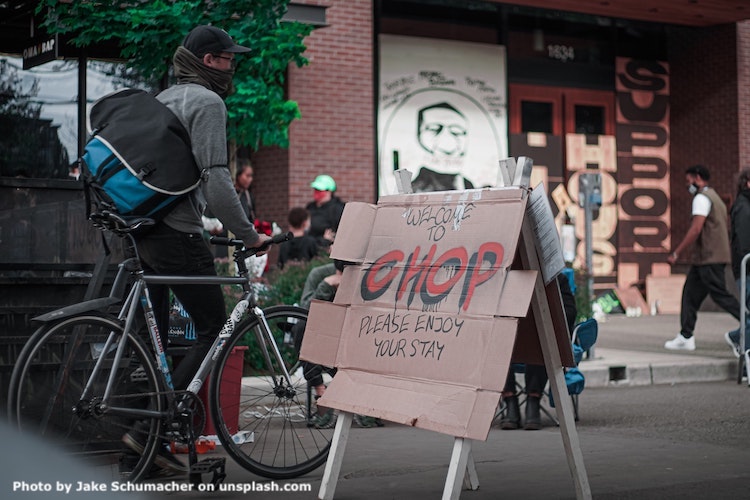
Protestors frequently gathered around the Seattle Police Department’s (SPD’s) East precinct, with reported confrontations between police and demonstrators occurring daily. On June 8, 2020, the SPD abandoned the precinct in an attempt to quell the confrontations. An encampment was quickly established in a six-block area encompassing the abandoned precinct. The encampment would come to be known as the “Capitol Hill Occupation Protest” (CHOP). Protesters created a barricade around the perimeter of the area, using wooden pallets and other readily-available objects, which acted as a makeshift jurisdictional boundary for CHOP. Teams of civilian volunteers formed an armed security detail and medic team for the purpose of minimizing reliance on city agencies.

Seattle police officers were sent an email stating they should not respond to any call within the CHOP zone unless it was a “mass casualty event.” On July 1, 2020, the Seattle Mayor ordered SPD to disband occupants from the CHOP zone and re-occupy the police station. The order came after 4 shootings (2 of which were fatal) occurred over a 10-day period, which spurned increased calls for CHOP’s closure.

CHOP generated widely differing assessments from residents and public officials in Seattle. Where some saw a lawless area that threatened public safety, others saw a vibrant community advancing social justice. The fall of CHOP was met with the same level of disagreement. Some Seattle residents and officials saw the closure as an example of police violence against peaceful protestors, while others applauded what they perceived as a return to safety and order.

The geographically focused, time limited nature of CHOP provided an opportunity for a natural experiment to test the effect of the autonomous zone on crime. We used the microsynthetic control group method to create a control area of weighted street segments that are empirically equal to the intervention area street segments. We explore crime level changes in three separate intervention areas: the CHOP zone, all areas within 2-blocks and including the CHOP zone, and the entirety of the SPD East precinct service area.

Statistically significant crime increases were observed for each of the three intervention areas. The largest increase was observed in the immediate CHOP zone, with the crime total 132.9% higher than the weighted control area during the 24-day occupation period. Crime totals were 77.5% higher and 27.8% higher than the weighted control area in the 2-block CHOP zone and East precinct service area, respectively. Follow-up analyses concluded that no single crime type was responsible for the significant crime increases. The significant crime increase is noteworthy given the short time frame of the CHOP occupation and retreat of police from the area theoretically making it more challenging for crimes to be reported by citizens and/or proactively discovered by officers.

Findings suggest that police abolition, the most extreme form of police defunding, may significantly compromise public safety. Policy makers should support the evidence-based crime prevention work of both police and community-based institutions. Such an approach may achieve currently desired policing reforms without risking crime spikes that can result from drastic reductions of police presence. Wide-scale adoption of evidence-based policing may provide a vehicle for such meaningful, long-term reform.

The Badger Project: Homicide clearance rate in Wisconsin ranks near top in nation

The homicide clearance rate in Wisconsin is one of the highest in the country, according to a national nonprofit which tracks the data.

About 72 percent of homicides committed in Wisconsin over the last decade were “cleared” — usually meaning law enforcement filed charges in the case — according to the Murder Accountability Project. That does not mean a conviction was won.

Wisconsin’s murder clearance rate is the eleventh best in the country in that time, according to an analysis of the data by The Badger Project.

The FBI released its annual Uniform Crime Report for 2020 on Monday. Like many states, Wisconsin saw a big increase in homicides in the tumultuous pandemic year of 2020 — from 177 in 2019 way up to 303.

From 2011-2020, the five states with the highest rates of clearing homicides are, starting at the top: Maine, North Dakota, Alaska, South Dakota and Wyoming. The states with the worst rates are, starting at the bottom: Michigan, Rhode Island, Ohio, Indiana, and Massachusetts.

Law enforcement documented more than 1,900 homicides in Wisconsin from 2011-2020, according to the Murder Accountability Project. Nearly 1,400 of those homicides were cleared. That puts Wisconsin’s clearance rate as the fourth-best in states with over 1,000 murders in that time period. In that cohort, only Minnesota, Nevada and North Carolina have higher rates at 73, 73.5 and 76 percent, respectively…

ATWJE: Eric Piza – The Researcher at Heart Analyst

What is it like to truly follow your interests? In this week’s episode, Dr. Eric Piza talks about his transition from an analyst in Newark, New Jersey to a professor and researcher at John Jay College. Eric reflects on his two badges stories: Foot Patrol Hotspots and Video Surveillance. While many research projects broke his heart, this does not discourage him from pursuing his interests. Jason and Eric also have a lengthy discussion on the lack of new key performance indicators in the Compstat process. Eric has a new book entitled Modern Policing Using ArcGIS Pro, and he is currently an associate professor at John Jay College of Criminal Justice…

Conducting a Systematic Social Observation of Body-Camera Footage: Methodological and Practical Insights

Vijay Chillar, Eric L. Piza, & Victoria A. Sytsma (2021)

Journal of Qualitative Criminal Justice & Criminology

*This study was funded by the Charles Koch Foundation, Policing and Criminal Justice Reform program

Key Takeaways

  • Increased use of video recording technologies enables researchers to observe human behavior in its natural setting
  • Data generated by such technologies facilitate a Video Data Analysis (VDA) framework, which focuses on situational dynamics and behaviors to understand how people act and interact
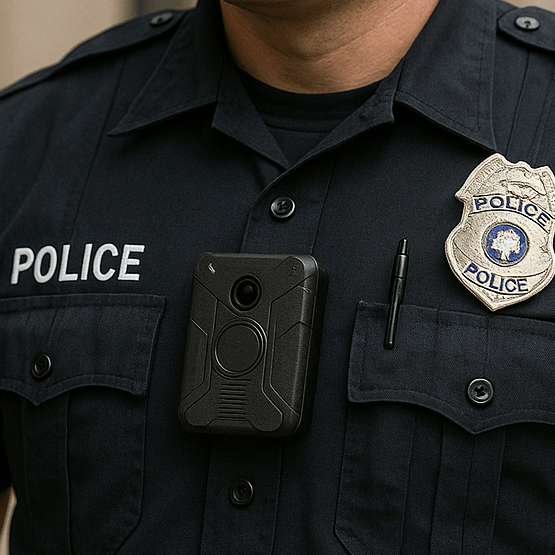
  • Body-worn cameras (BWCs) provide valuable insight into the situational dynamics of police-citizen interactions
  • VDA of BWC footage can help overcome limitations of traditional qualitative methodologies
  • There are certain challenges associated with VDA of BWC footage that researchers will need to navigate

Research Summary

Video recording technologies provide researchers with modes for observing human behavior in its natural setting. These data sources facilitate a video data analysis (VDA) methodological framework, which focuses on situational dynamics and behaviors to understand how people act and interact. Body-worn cameras (BWCs) are an emerging technology within this framework and allow researchers to overcome various challenges that are inherent in qualitative research. However, the use of BWC footage can present a host of new challenges for researchers to address. This article incorporates a practical example detailing the application of a VDA framework using BWC footage in a research project on police use of force in Newark, NJ.

VDA can overcome concerns about access and individual protections because it does not require direct interaction with subjects, making it preferable in some contexts. This is especially so when protections are taken to prevent researchers from collecting identifying information of research subjects. In the current study, Newark Police Division (NPD) policy requires that officers notify civilians that they are being recorded, alerting them their actions can be viewed in the future. However, civilians are not agreeing to have the recording used for research purposes in these moments. As such, researchers should always ensure the principle of beneficence (i.e., the study’s  benefits outweigh the potential risks) is met.

Researchers have finite time to scan an interaction, record relevant variables, and make sense of them in traditional participant observation research. In contrast, the use of BWC footage affords researchers unlimited time which provides opportunity to rigorously interpret the context and setting. The permanent record also navigates problems associated with observer and participant recall error. However, perspective bias has the potential to skew how the viewer interprets such footage. In the current study, video is recorded from only the officer’s perspective. Since NPD requires all officers to wear BWCs, we benefited from having various vantage points of a single event. However, to ensure consistent coding, SSOs should be preceded by in-depth footage reviews, the operationalization of analytical dimensions (i.e., the content of interest), and the creation of data collection protocols and code sheets.

Technical limitations can present a number of challenges to this line of research. In our study, the BWC vendor did not enable video streaming within its software. This required all videos to be downloaded from a central server to an external hard drive kept in a secure location at police headquarters. The inability to view footage remotely precluded the participation of all authors in the coding. To maintain a team approach to coding, the authors regularly met to discuss coding decisions and answer any questions the main coder raised. However, the process would have been much more efficient if the BWC system enabled video streaming. Further, the first 30 seconds of audio were muted in all videos, making communication between officers, dispatchers, suspects or involved parities (which could have contained valuable data for the study) inaudible at the very beginning of each use of force event.

Lastly, BWC footage is time consuming to view, and interactions between humans can be chaotic, fast-paced, and nuanced. Taking careful note of visual cues and context is important, as is having no illusions about the time commitment required to conduct the research. It took approximately 91 hours to download all videos for our study sample, and about 300 hours to systematically view and code the videos. Researchers interested in using BWC footage as a data source should be mindful of the upfront time and resource requirements.

The Markup: Uber And Lyft Drivers Are Being Carjacked at Alarming Rates

As Lyft driver Cynthia Norman steered a white Chevy through Cleveland’s streets on a cold night in January, the app pinged her to pick up a passenger named “NBA.” She pulled up to the curb in front of a two-story brick apartment complex where two men who looked to be in their 20s were waiting for her. One was wearing a gold hoodie, the other was in a black hoodie; both had on face masks…

Measuring Procedural Justice Policy Adherence During Use of Force Events: The Body-Worn Camera as a Performance Monitoring Tool

Victoria A. Sytsma, Eric L. Piza, Vijay Chillar, & Leigh Grossman (2021)

Criminal Justice Policy Review

*This study was funded by the Charles Koch Foundation, Policing and Criminal Justice Reform program

Key Takeaways

  • Systematic Social Observation of body-camera (BWC) used as a performance monitoring tool to measure police officer adherence to agency policies on bias-free policing and use of force
  • A slim majority of use of force events were procedurally just
  • Certain procedural justice standards (e.g. addressing suspect concerns and using respectful language) were observed in a minority of cases
  • Officers issue calm commands in a majority of cases, but suspect compliance with such commands was low; similarly, low compliance was observed for shout commands
  • Most officers adhere to agency policy of using escalating verbal commands before resorting to physical force

Research Summary

In May 2011, the U.S. Department of Justice’s Civil Rights Division opened an investigation into the Newark Police Division (NPD) after receiving allegations of civil rights violations by the agency. This investigation found evidence of an unconstitutional pattern or practice of use of force, resulting in a Department of Justice consent decree. The consent decree required the NPD to adopt specific reforms to address the violations, including the deployment of body-worn cameras (BWCs) and revised policies on bias-free policing and use of force.

This study uses BWCs as a performance monitoring tool to measure police officer adherence to these updated policies. Systematic social observation of BWC footage measured police officers’ adherence to procedural justice dimensions informed by the revised NPD policies: officer announcements of BWC, officer explaining the reason for response to the scene, officer addressing suspect concerns, officer allowing suspect to speak, officer displays verbally antagonistic behavior (reverse coded), and officer use of calm and shout commands prior to force.   

The study sample consists of 91 use of force events recorded by BWCs between December 2017 through the end of 2018. Use of force events include a period of time preceding and following the use of force incident(s), beginning when the officers are first visibly seen interacting with any involved parties (e.g., suspects, bystanders, or victims). The end of the use of force event can be described as the time at which full suspect compliance is secured.

Officers announced the presence of BWC in 41.76% of cases. In 30.77% of cases, an officer can be observed providing a reason to the suspect as to why the officer responded to the scene. In 42.86% of cases, an officer explained to the suspect why they were being detained. In 65.93% of cases, the suspect attempted to speak for the purpose of expressing their views with officers allowing suspects to speak in 76.67% of those cases and attempting to answer suspect questions in 75% of those cases. In 36.26% of cases, at least one officer displayed verbally antagonistic behavior toward the suspect, which indicates low compliance with policy directives calling for officers to “be courteous, respectful, and professional.”

An officer gave the suspect a calm command in 78.02% of cases. Suspects complied with calm commands in 23.94% of cases, showing suspect compliance to be low. In 53.85% of cases, an officer gave the suspect a shout command with suspect compliance also low for this dimension (22.45% compliance).  Results around commands suggest that, despite suspects often not complying, many officers are quite committed to verbal directives and to remaining calm in their delivery of a command. Results further indicate most officers adhere to the NPD policy of using escalating verbal commands before resorting to physical force.

A 7-point procedural justice scale combining the overall dimensions found that use of force events do trend toward more procedurally just. However, while most of the sample (58%) scored between 4 and 7 on the procedural justice scale, a substantial portion (42%) are below the median and nearly 18% of cases have a score of 0 or 1. These results paint a more general picture of officer actions relative to the specific indicators and suggest officer conduct could be improved during use of force events.